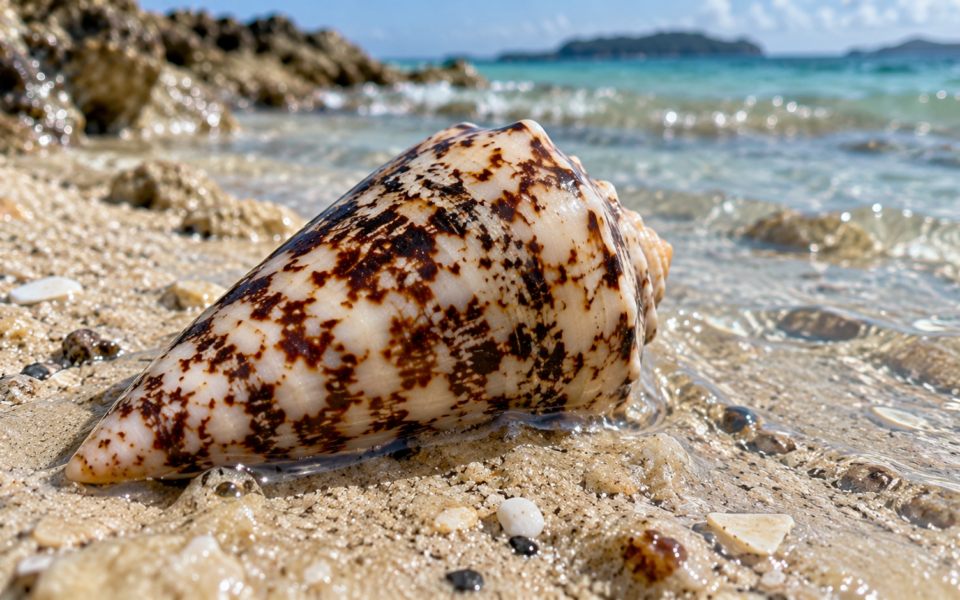
Short answer: no, not the ones in your garden. The snail poisoning stories worth knowing about come from the ocean, not your flower bed. And the difference between the two is bigger than most people think.
I grew up picking up garden snails after every rainstorm, so when someone first told me sea snails could kill you, I honestly thought they were joking. They weren’t.
Garden Snails: Harmless to Touch, Riskier to Eat
If you’ve ever handled a snail crawling across your patio, you’re fine. Common garden snails aren’t inherently poisonous or venomous, and they don’t produce toxins meant to harm you. Picking one up, letting it crawl on your hand, moving it off a footpath, none of that carries any real risk.
Eating one raw is a different story. Garden snails can carry parasites and bacteria, including rat lungworm, which can cause serious illness if the snail is eaten raw or undercooked. This is the part most people miss: the danger isn’t the snail’s body, it’s what’s living inside its gut. Restaurant escargot is safe because the snails are farmed and properly purged and cooked. A wild snail off your lawn is not the same thing.
I remember a friend joking about the French eating snails and thinking it sounded insane at the time. Turns out the “insane” part isn’t eating them. It’s eating one you found outside without preparing it first.
Poisonous or Venomous? The Distinction That Actually Matters
Most articles use these words interchangeably, and that’s where the confusion starts. Poisonous means an animal is harmful if you eat it or touch it and it releases toxin passively. Venomous means it actively injects toxin into you, usually through a bite or sting.
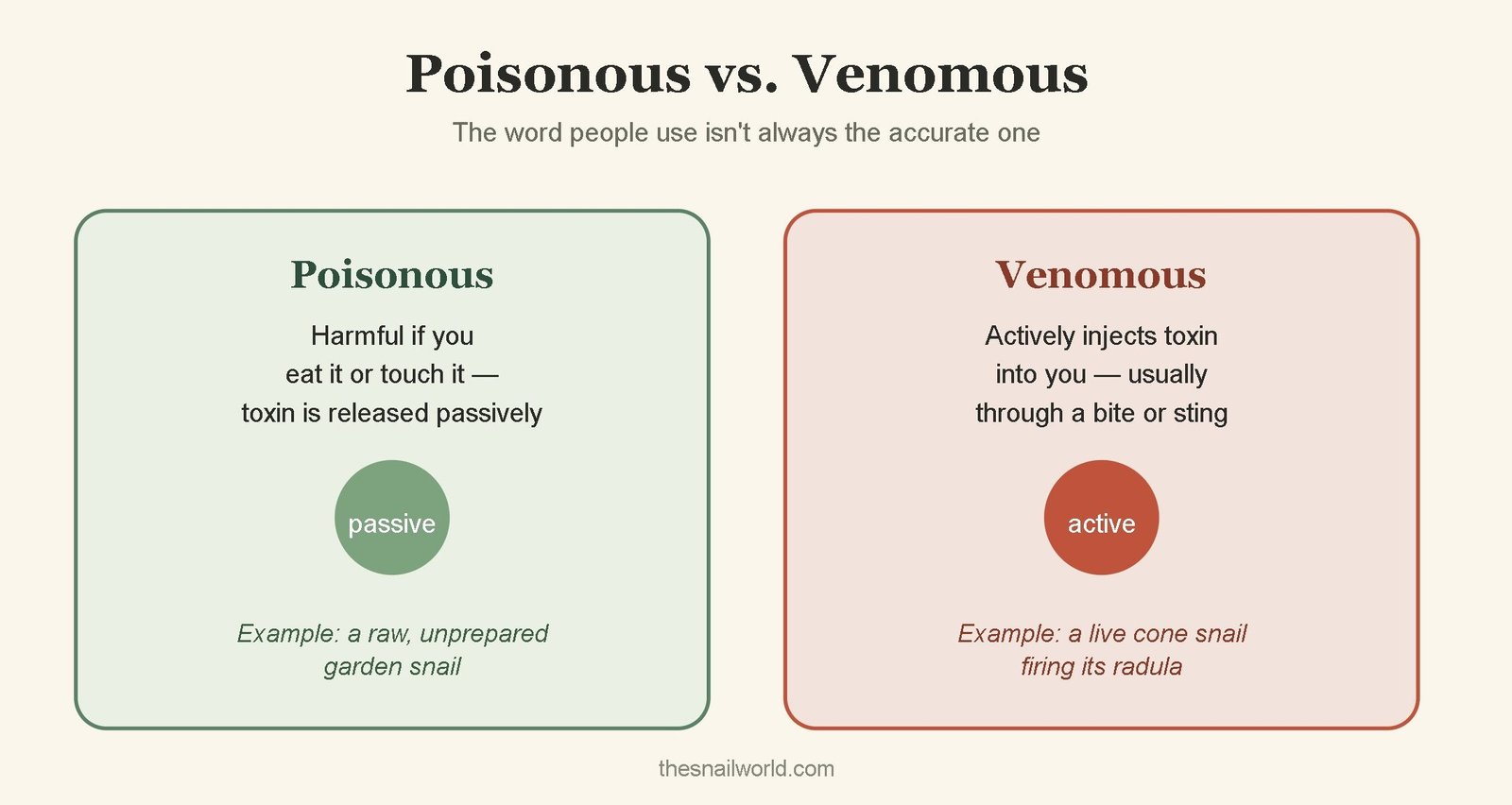
By that definition, garden snails are neither. The dangerous sea snails you’re about to read about aren’t technically “poisonous” either. They’re venomous. They inject their toxin on purpose. The label “poisonous snail” has just stuck in everyday language, so that’s the term most people search for, even when venomous is the accurate one.
The Cone Snail: The Ocean’s Most Dangerous Snail
This is the one your local guide is trying to warn you about. Cone snails live in warm, shallow tropical and subtropical waters, including the Red Sea, the Caribbean, the Indian Ocean, the Pacific, and even warm reef waters off Florida. Their shells are often strikingly beautiful, which is exactly why people pick them up.
That’s the mistake. Cone snails hunt using a harpoon-like tooth called a radula, which fires out and injects venom in a fraction of a second. Each cone snail’s venom is a complex mixture of compounds that can contain over 100,000 different bioactive substances, targeting multiple points in the nervous and muscular system at once. That complexity is also why no effective antivenom exists. Doctors can only treat the symptoms as they happen.
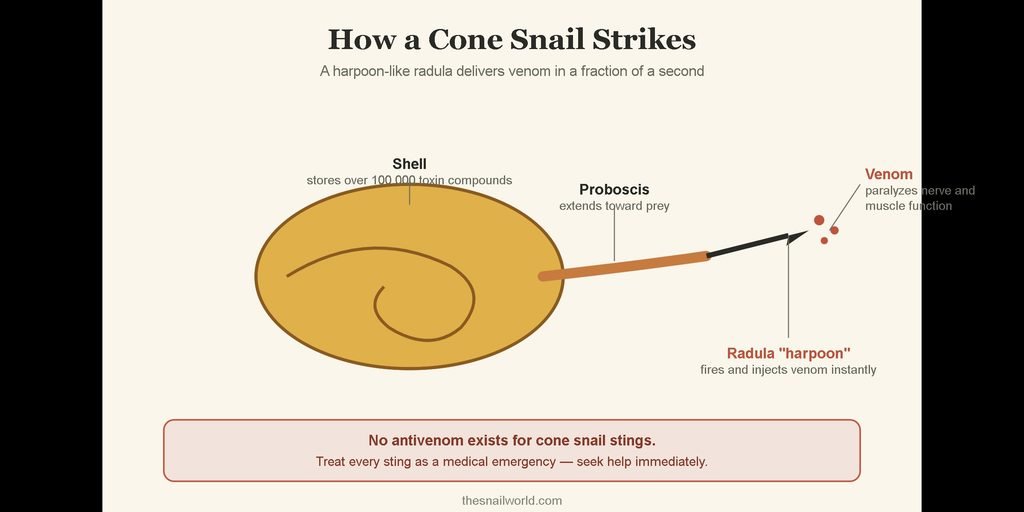
The numbers are serious enough to take seriously: reported fatality rates from cone snail stings range from 15% to 75%, depending on the species and how quickly treatment happens.
The Species Worth Knowing By Name
- Geography cone snail. One of the two species most likely to cause a fatal sting in humans.
- Textile cone snail. The other high-risk species. The Aquarium of the Pacific specifically flags the textile and geography cones as carrying a higher risk of death.
- Tulip cone snail. Also listed among the most dangerous, though less commonly encountered by divers.
You’ll sometimes see the geography cone called the “cigarette snail,” with a claim that you have “about as long as it takes to smoke a cigarette” before you die. That’s an exaggeration that’s been repeated so often it now sounds like fact. Don’t treat it as a real timeline. Treat any cone snail sting as an emergency and get to a hospital immediately, no matter how you feel in the first few minutes.
A Beach Trip That Changed How I See Shells
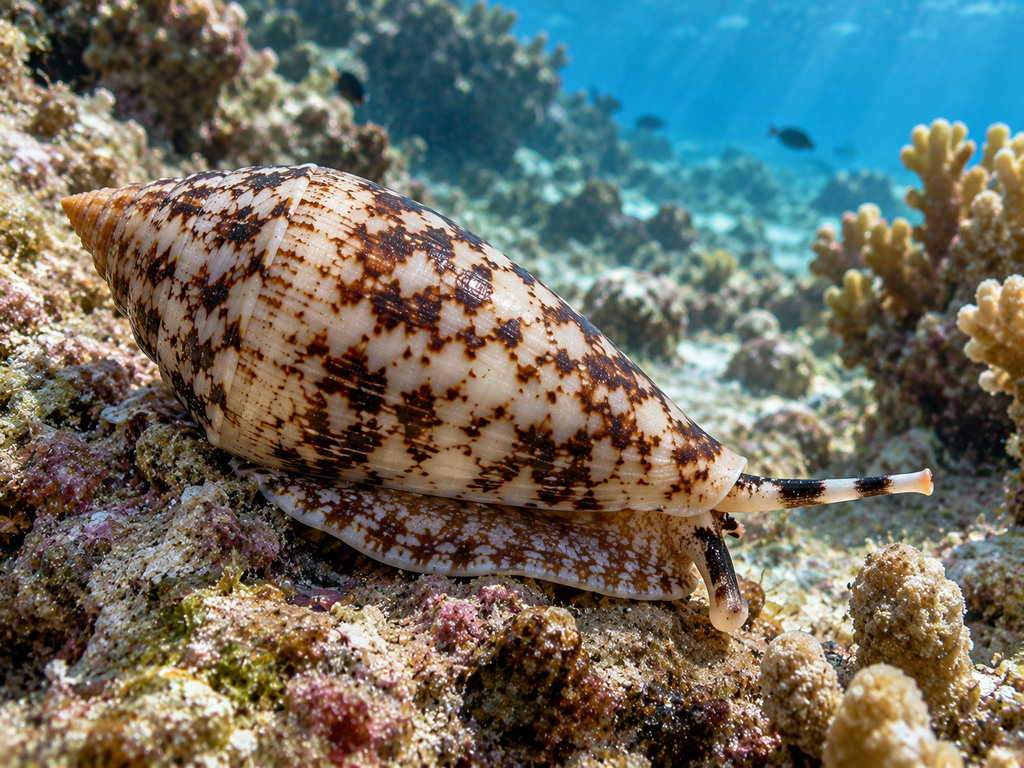
I found this out the hard way, or almost did. On a family beach trip, I was about to pick up a gorgeous, patterned shell half-buried in the sand when a local guide stopped me mid-reach. He explained that live cone snails often look exactly like empty shells from the outside, and tourists pick them up assuming they’re souvenirs. That one conversation is the reason I now leave every unfamiliar shell exactly where I found it.
Snail Myths vs. Facts
Myth: All snails are slow and harmless. Fact: Most are. A small number of sea snail species are fast enough and dangerous enough to be a genuine medical emergency.
Myth: Snail venom only affects small prey, not humans. Fact: Cone snail venom evolved to paralyze fish almost instantly. A human-sized body isn’t immune to the same neurotoxins, just slower to succumb.
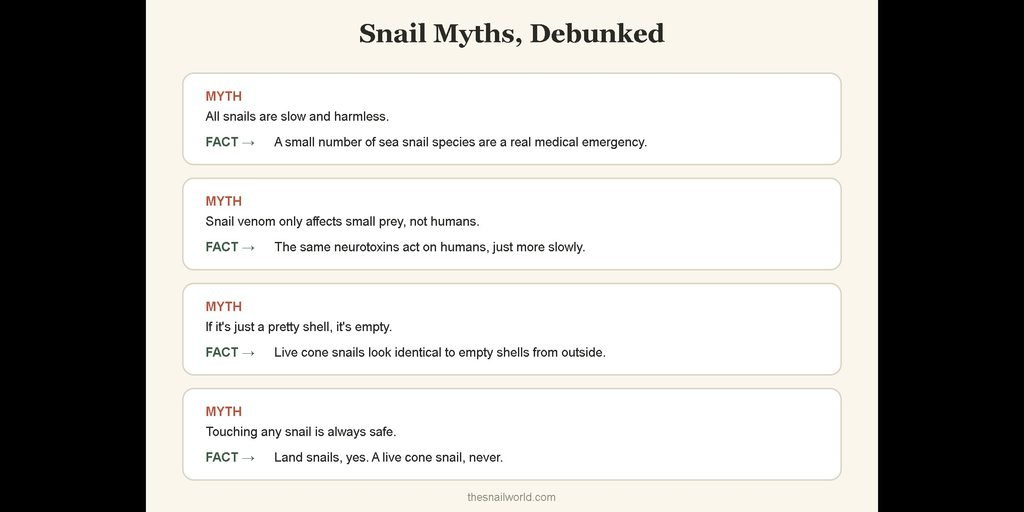
Myth: If it’s just a pretty shell, it’s empty. Fact: Live cone snails hide inside shells that look identical to empty ones. Assume any shell in cone snail territory could still be occupied.
Myth: Touching any snail is always safe. Fact: Touching a land snail is fine. Touching a live cone snail, or eating an unprepared wild snail, is not.
How to Stay Safe Around Snails
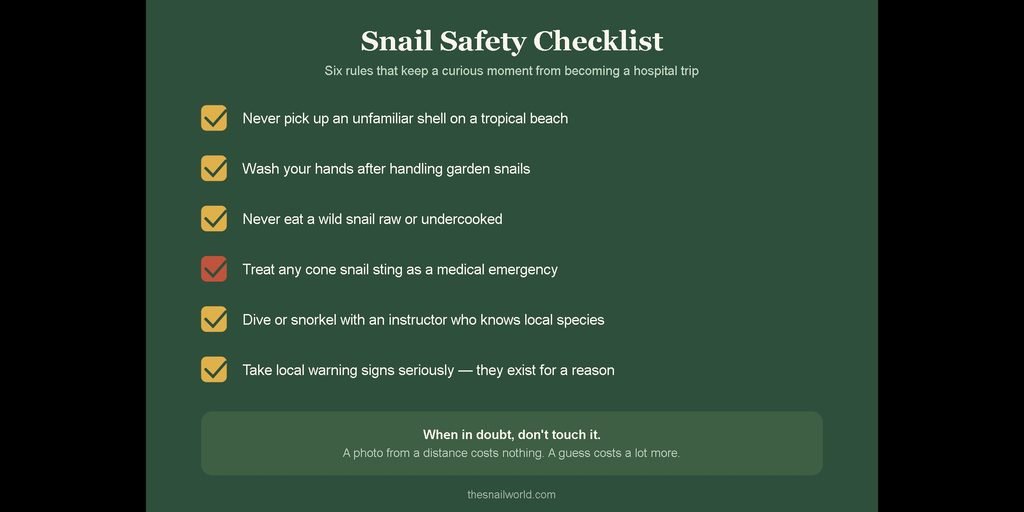
Six rules. That's really all it takes- Don’t pick up unfamiliar shells on tropical or subtropical beaches, no matter how attractive they look.
- Wash your hands after handling garden snails. It’s a good habit, even though the risk is low.
- Never eat a wild snail raw or undercooked; rat lungworm and other parasites don’t announce themselves.
- If you’re ever stung by a cone snail, treat it as a medical emergency and get help immediately. Don’t wait to see how you feel.
- Snorkel and dive with an experienced local instructor who knows which species live in that specific area.
- Take local warning signs seriously. They exist because someone already learned the hard way.
FAQ
Are snails poisonous to touch?
No. Garden and land snails are safe to touch. The exception is live cone snails in tropical waters, which should never be handled
Are snails poisonous to eat raw?
Yes, effectively. Raw or undercooked snails can carry parasites like rat lungworm and bacteria such as Salmonella, which can cause serious illness
What is the most poisonous snail in the world?
The cone snail, particularly the geography and textile cone species, is considered the most dangerous snail to humans because of its potent, fast-acting venom
Are snails poisonous to dogs?
Not directly poisonous, but dangerous in another way. Snails can pass on lungworm parasites to dogs, which is why vets recommend keeping pets away from them and using a lungworm preventative
How do you know if a snail shell is dangerous?
You often can’t tell from the outside. In areas known for cone snails, treat every unfamiliar shell as if it could be occupied and leave it alone
Conclusion
The snail in your garden and the snail on a tropical beach are not the same kind of risk. One is essentially harmless if you leave the “eating it raw” part out. The other can put you in a hospital. Know which one you’re looking at, respect local warnings, and you’ll never have a bad story to tell about either one.

1 Comment