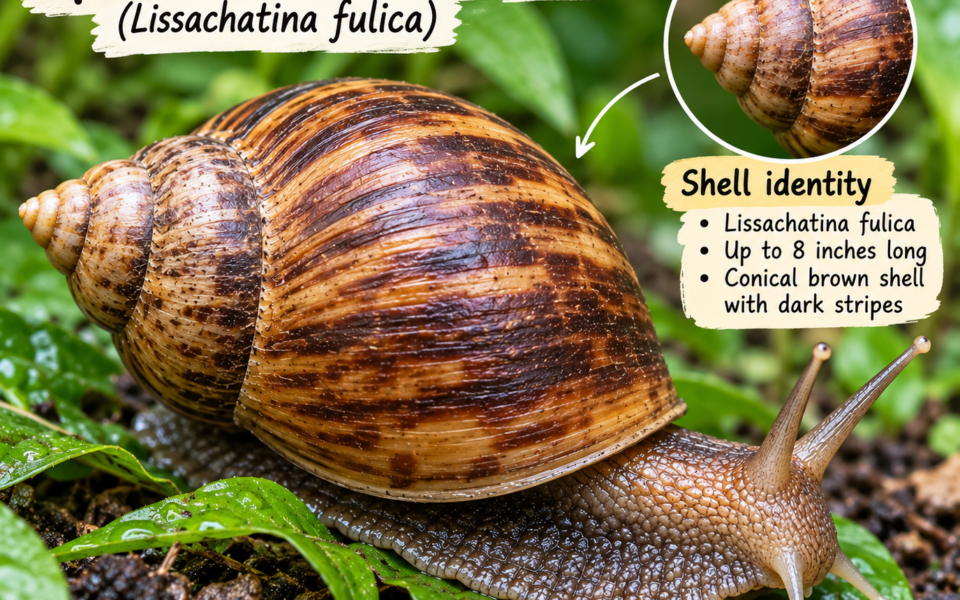
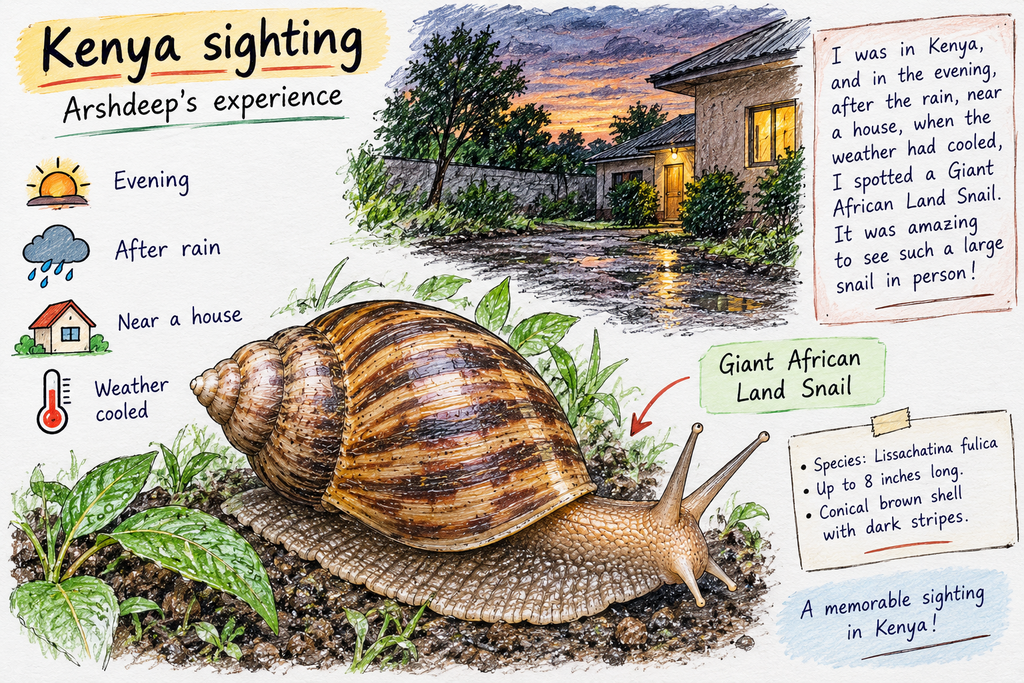
A few months ago, on a trip to Kenya, I was outside with a friend around 6pm after it had rained earlier that day. The air had cooled off, and right near a house we passed, we spotted three snails, each easily the size of a fist. Regular garden snails don’t get that big. What we’d found were Giant African Land Snails, and if you’ve ever had a similar encounter in your own backyard, that discovery is worth taking seriously.
What Is a Giant African Land Snail?
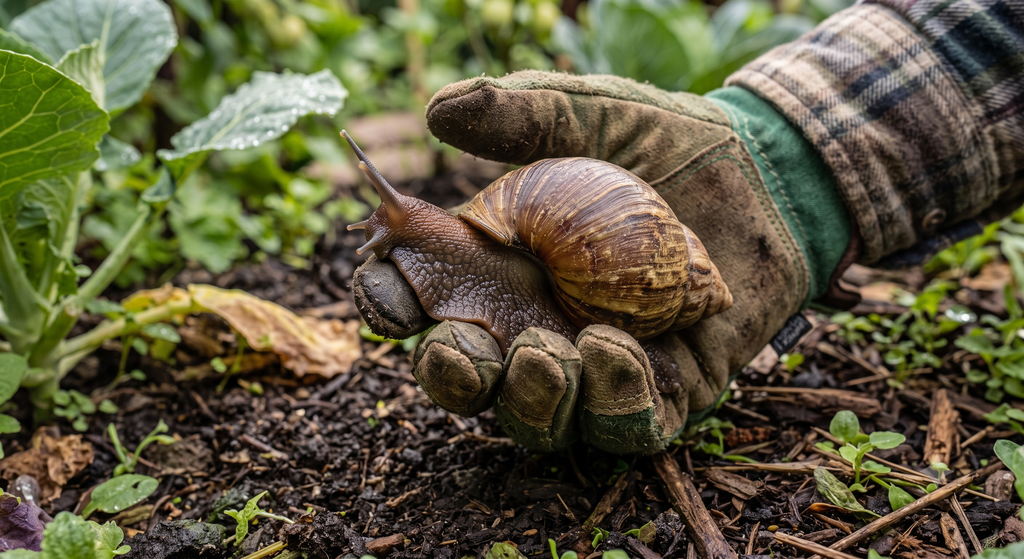
Its scientific name is Lissachatina fulica, and it’s one of the largest land snails on the planet. A full-grown shell can reach nearly 8 inches long, conical in shape, tapering to a point on one end and rounded on the other. The shell is typically light brown with darker brown stripes running along it.
The species originated along the coast of East Africa, from Kenya and Somalia down to Mozambique. Since then it has spread through Asia, the Pacific islands, the Caribbean, and parts of the United States, almost always through human transport rather than natural migration. The Global Invasive Species Database lists it among the 100 worst invasive species in the world.
Why Three Snails Turned Into an 18,000-Snail Problem
The clearest way to understand how serious this pest is comes from a real case in Florida. In 1966, a boy returning from a trip to Hawaii smuggled three Giant African Land Snails home to Miami. His grandmother, not realizing what they were, released them into her garden. Seven years later, more than 18,000 snails had been found in the surrounding area, along with thousands of eggs. Eradicating them took the state of Florida roughly ten years and about $1 million.
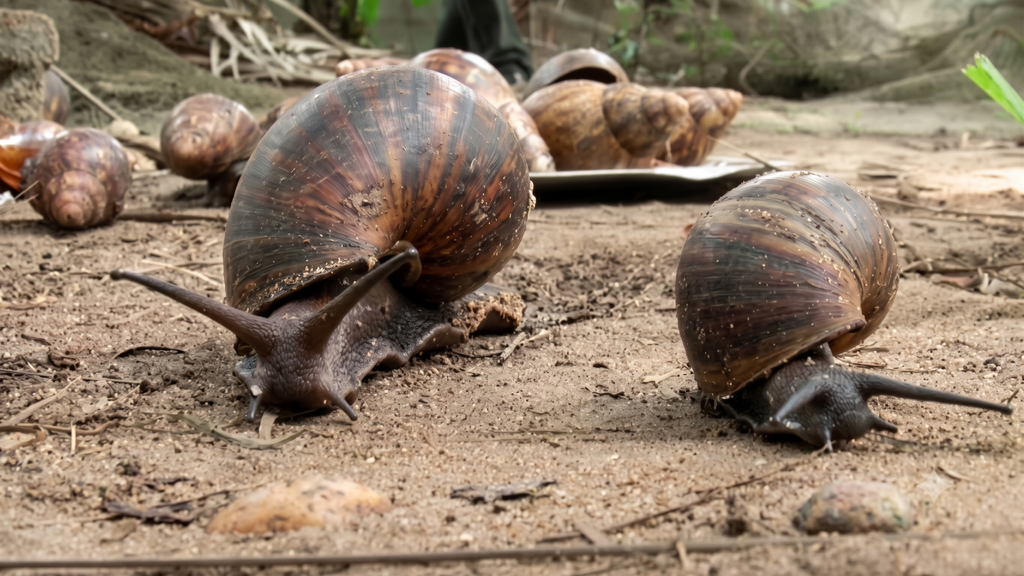
Three snails became eighteen thousand. That’s the entire reason agriculture departments take reports of this species so seriously, and it’s why Florida found itself dealing with a second infestation in 2011.
How Fast It Spreads, and Why
Three things drive the population growth:
An extremely broad diet
It feeds on more than 500 different plant species, including crops like peanuts, beans, and cucumbers, so it rarely runs out of food in a new environment.
It’s a hermaphrodite
Every individual has both male and female reproductive organs, and after mating, it can store sperm for extended periods.
High egg output
A single snail can lay up to 200 eggs per clutch and reproduce multiple times under favorable conditions.
Put those together and a handful of snails in a backyard can become an infestation within a few years if nothing is done, exactly as happened in Miami.
How To Identify One
If you’re not sure whether what you found is a Giant African Land Snail or an ordinary garden snail, the size difference alone usually settles it.
| Feature | Giant African Land Snail | Common Garden Snail |
|---|---|---|
| Shell length | Up to 8 inches (20 cm) | Under 1.5 inches |
| Shell shape | Elongated, conical, pointed tip | Rounded, tightly coiled |
| Coloring | Brown shell with darker brown vertical stripes | Muted, low-contrast bands |
| Activity pattern | Most active at night or after rain | Active at various times |
Once you’ve seen one in person, the size makes it hard to mistake for anything else. That was true for us in Kenya too: even in the low evening light, there was no mistaking those shells for anything you’d normally find in a garden. They weren’t moving fast, but they also weren’t hiding. The rain earlier that day had clearly brought them out.
Anatomy Worth Knowing
The snail has four tentacles on its head. The two longer, upper tentacles carry its eyes, though its eyesight is weak and mostly useful for detecting light and nearby movement. The two shorter, lower tentacles handle smell and touch.
It moves on a single muscular foot and leaves behind a trail of mucus, which helps it glide and protects its body from rough surfaces.
What It Eats
According to USDA and university extension records, the snail feeds on more than 500 plant types, from home garden vegetables to commercial crops like cassava, banana, and papaya. When it needs calcium to maintain its shell, it will scrape at stucco, plaster, or painted surfaces on houses, something several state agriculture departments specifically warn homeowners about.
The Health Risk: Why You Shouldn’t Handle One Bare-Handed
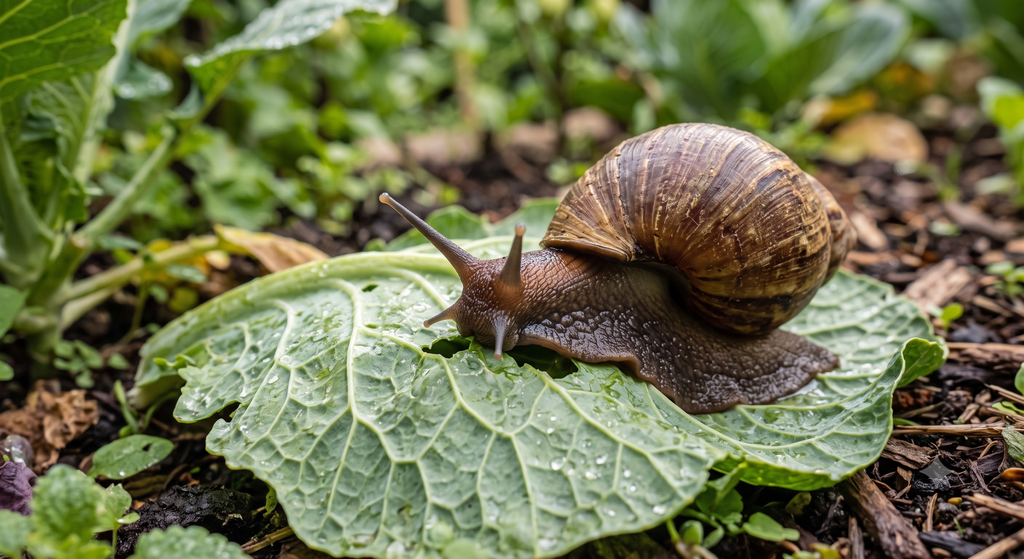
The snail itself isn’t venomous, but in some regions it carries the rat lungworm parasite (Angiostrongylus cantonensis). According to a public health advisory from the Georgia Department of Agriculture, this parasite can cause eosinophilic meningitis in humans, typically transmitted by eating undercooked infected snail meat or contaminated produce, or by touching the snail’s secretions and then touching your eyes, nose, or mouth.
Not every snail is infected, but the safe habits are simple either way:
- Don’t pick up an unidentified wild snail with bare hands
- Use gloves or a tool if you need to remove one
- Wash your hands thoroughly afterward
- Rinse garden produce before eating it, especially if snails have been active in the area
Why You See Them Right After It Rains
Snails need moisture to move and to keep their bodies from drying out. Dry ground makes that harder, so once rain has soaked the soil, they come out to feed and are far easier to spot. During dry or hot stretches, they do the opposite: they seal the opening of their shell with a dried mucus layer called an epiphragm and wait it out until conditions improve.
Can You Keep One as a Pet?
In most US states, owning, selling, or transporting a Giant African Land Snail is illegal without a permit, since it’s classified as a regulated invasive species by the USDA. Anyone considering one as an exotic pet should check with their state department of agriculture first, because the penalties for possessing one unlawfully can be significant.
What To Do If You Find One
- Don’t touch it with bare hands
- Remove it with gloves or a tool if necessary
- Wash your hands well afterward
- Rinse any nearby garden produce
- Report it to your state department of agriculture or the USDA’s pest reporting line, since early reports are what prevent a Florida-style infestation
Bottom Line
A Giant African Land Snail looks slow and harmless, but the Miami case is proof of how fast that changes. Three snails released into one backyard cost a decade and a million dollars to clean up. Knowing how to identify one, handling it carefully, and reporting it quickly is the difference between a minor nuisance and a multi-year eradication effort.
FAQs
How big can a Giant African Land Snail get?
Its shell can reach nearly 8 inches (20 cm) long, and the fully extended body can appear even longer.
Is it dangerous to touch?
Some populations carry the rat lungworm parasite, which can cause eosinophilic meningitis in humans. It’s best to avoid handling one with bare hands.
What does it eat?
It feeds on more than 500 plant species, including garden vegetables, ornamental plants, and commercial crops. It will also scrape calcium-rich surfaces like stucco or plaster.
Can you legally keep one as a pet?
In most US states, no. It’s a regulated invasive species under USDA rules, and unpermitted possession can carry penalties.
Why do you see more of them after rain?
Rain increases moisture in the soil and air, which makes it easier for the snail to move and stay hydrated, so it becomes more active and visible.
Why does it spread so fast?
Its hermaphroditic reproduction, high egg output per clutch, and broad diet combine to let a small number of snails become a large population quickly, as seen in the 1966 Miami case.
