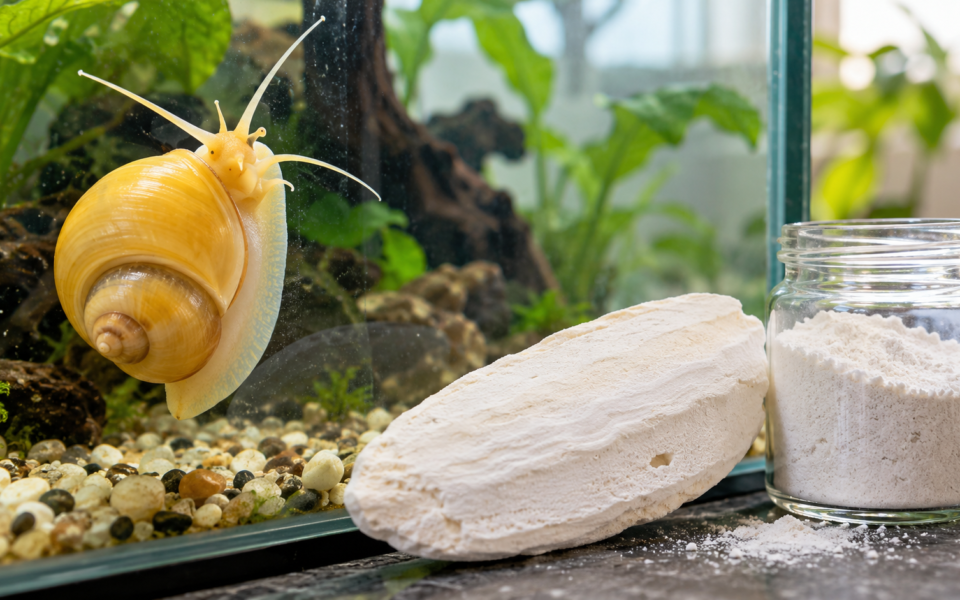
A rough, pitted shell on your snail is easy to spot and hard to fix, because every forum points you in a different direction. Snail shell repair usually comes down to two products, cuttlebone and calcium powder, and people argue about them like rival teams. I ran both side by side on two mystery snails with similar damage for six weeks. One grew shell faster. The other fixed the bigger problem.
Short answer: Calcium powder gave faster new shell growth in my test, but cuttlebone fixed the low pH that caused the damage in the first place. If you can only buy one, buy cuttlebone. The best shell came from using both.
Why Did My Snail’s Shell Start Pitting?
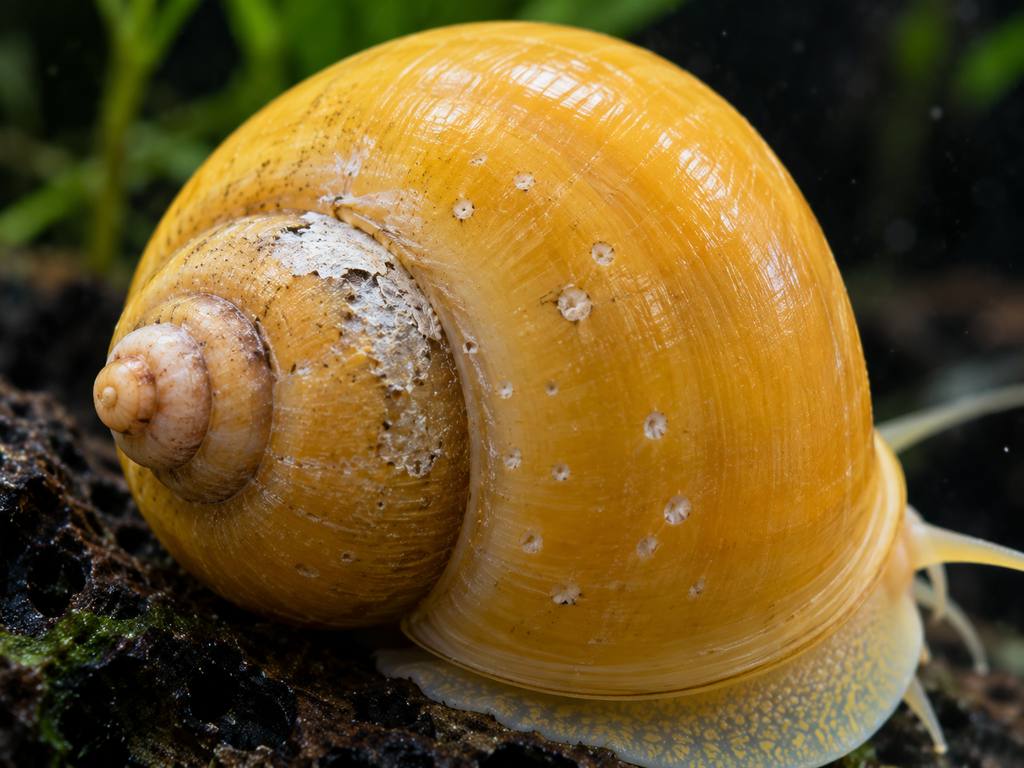
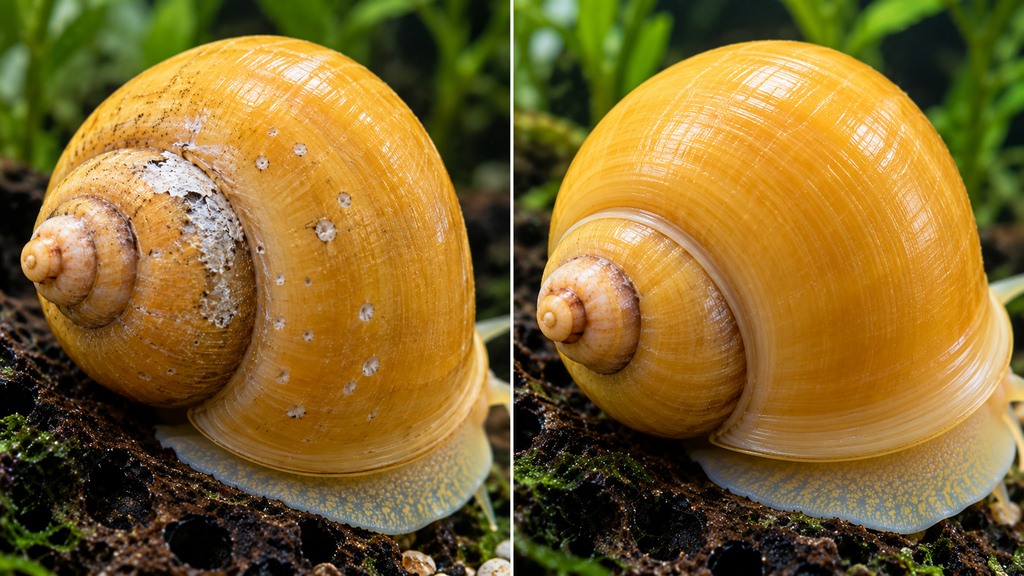
A few months back I noticed my mystery snail’s shell had gone from smooth to visibly rough. There were small white pits near the newer growth, and one flaky, chalky patch near the spire. I tested my water out of habit and found the pH sitting lower than I’d realized. I also hadn’t been adding any calcium at all.
Soft water with zero calcium input is a recipe for shell erosion. Acidic water is the most likely contributor, and a low calcium diet comes second, according to Aquariadise’s guide to mystery snail shell rot. If you’re still setting up your tank, our freshwater aquarium snails guide covers pH and species basics.
What Shell Erosion Looks Like
- Small white pits, mostly near the newer growth
- A flaky, chalky patch (mine was near the spire)
- A shell that has gone from smooth to visibly rough
Once I knew the cause, the next question was what to add to the tank. Every forum thread pointed two ways: cuttlebone or calcium powder. So I tried both, on two different snails, and just watched.
What Does a Damaged Snail Shell Need to Heal?
A snail’s shell is mostly calcium carbonate, and it grows in layers from the mantle, the soft tissue just under the shell’s edge. Older research on garden snails found that they patch damage by moving material to the injured spot, either from the digestive gland or from other parts of the shell (Nature). So a snail can only rebuild as much as it has material to work with.
Three things need to be in place:
- Available calcium in the water or diet
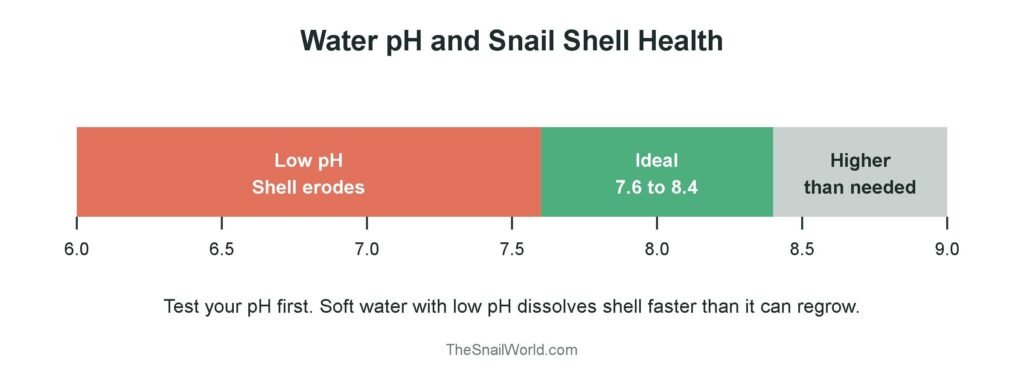
- A stable pH, ideally 7.6 to 8.4, since low pH actively dissolves shell
- Stable water overall, because a stressed snail spends its energy on survival, not shell repair
Cuttlebone and calcium powder solve the same problem, getting more calcium into the system. They just deliver it differently.
Cuttlebone for Snails: How I Used It and What Happened
How I Set It Up
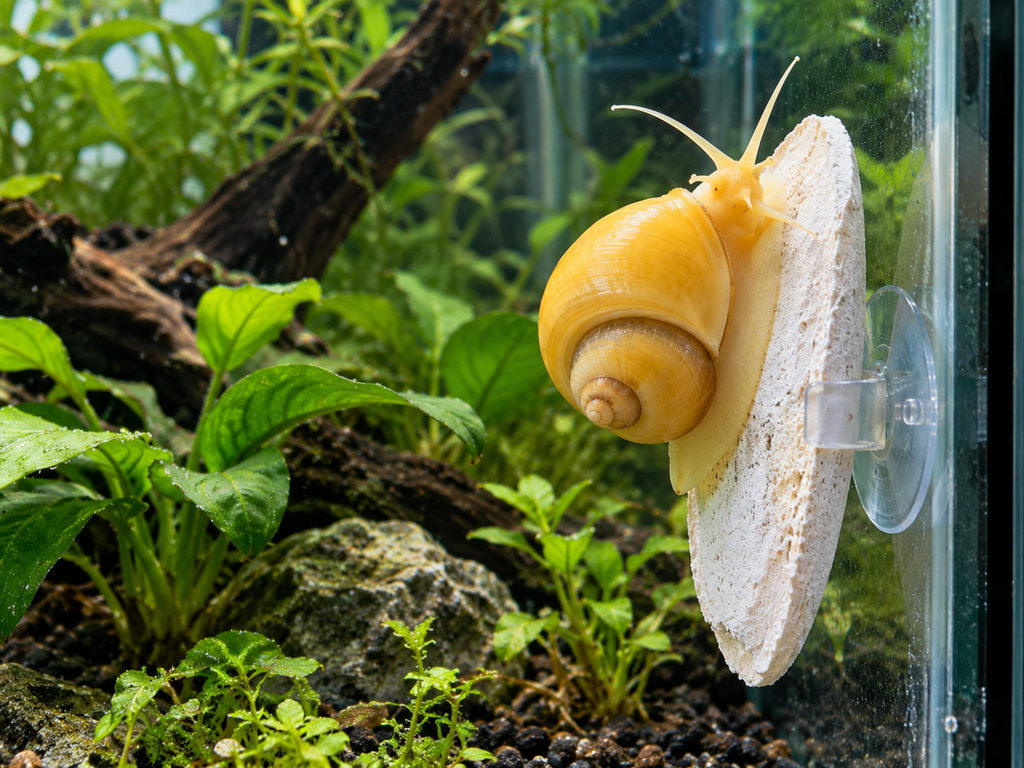
I bought plain, unseasoned cuttlebone from the bird supply aisle, the kind sold for parakeets, with no added vitamins or coating. I rinsed it and broke off a chunk about the size of my thumb. I’d read that sanding the hard spine down slightly helps it dissolve more evenly, so I did that, then let it float against the glass with a small suction clip.
Cuttlebone is mostly aragonite, a form of calcium carbonate, which is the same material your snail’s shell is made of (Aquariadise).
What I Noticed Over Six Weeks
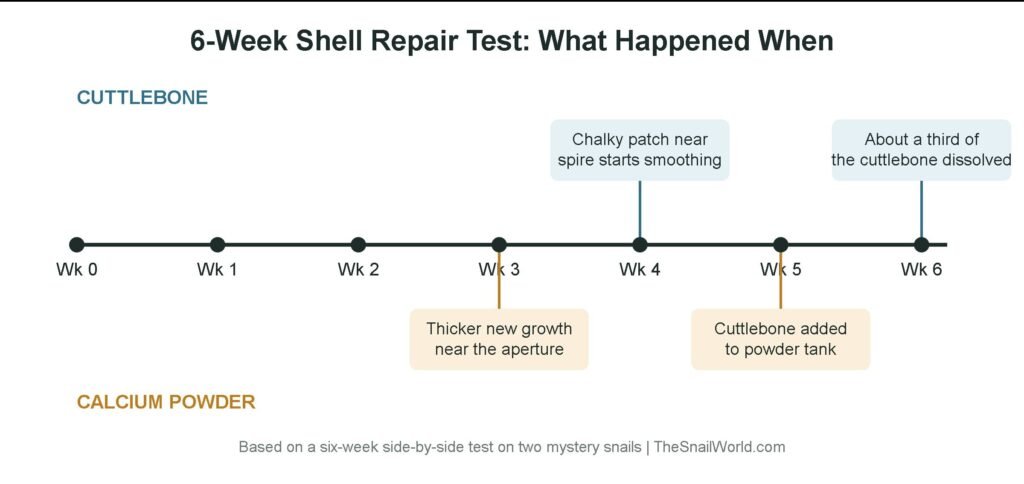
- It dissolved very slowly. About a third of the chunk was gone by week six.
- My snail occasionally rasped directly on it, which I hadn’t expected.
- It gently raised my pH over time, which probably helped as much as the calcium itself.
- It needed almost no maintenance. No dosing, no measuring.
The improvement was gradual but steady. By week four, the chalky patch near the spire had started to smooth over, with a visibly denser layer of new shell.
Calcium Powder for Snails: How I Used It and What Happened
How I Used It
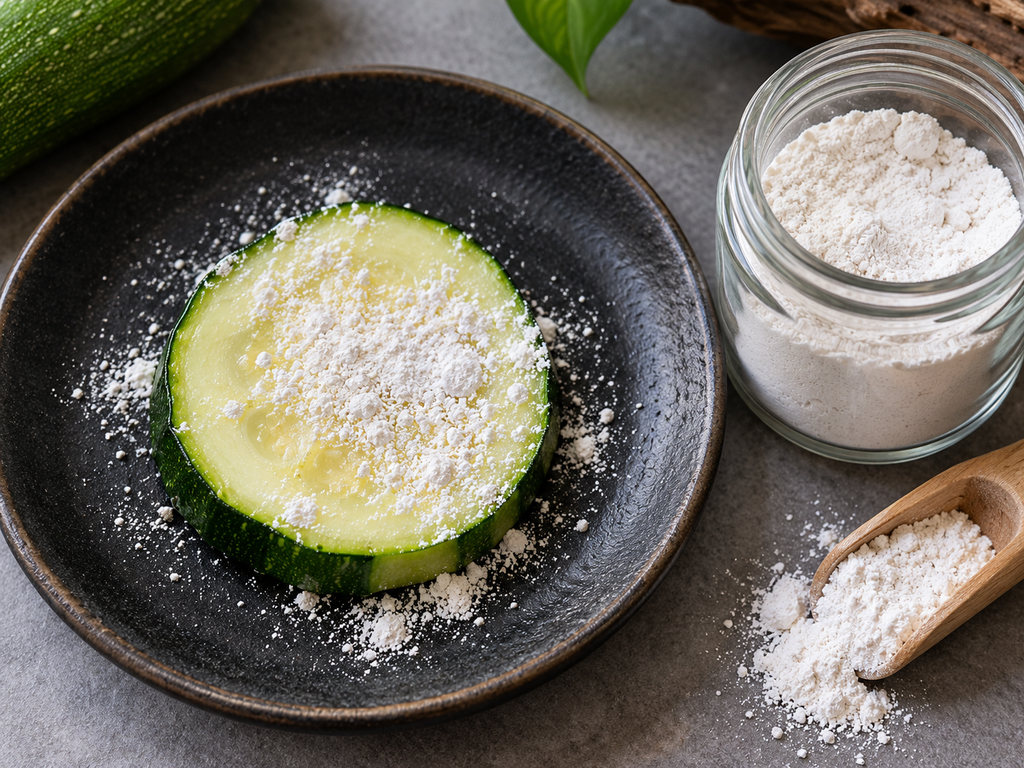
For the second snail I used a reptile grade calcium powder. It was plain calcium carbonate with no vitamin D3 added, since D3 is meant for reptiles, not aquatic snails, so check the label before you buy. I dusted a pinch onto its usual vegetables a few times a week. For more on safe foods, see our post on what snails eat.
I also tried dissolving a small amount straight into the water once. It clouded the tank slightly, so I didn’t repeat it.
What I Noticed Over Six Weeks
- Faster visible response. New shell near the aperture looked noticeably thicker by week three.
- It needed consistent dosing, and skipped doses seemed to slow progress.
- It had no meaningful effect on pH.
- Slightly messier. Powder settled on the substrate if the snail didn’t eat it quickly.
The powder grew new shell faster, but it depended entirely on me remembering to dose and on the snail actually eating the dusted food promptly.
Cuttlebone vs Calcium Powder: Side-by-Side Comparison
| Factor | Cuttlebone | Calcium Powder |
| Speed of visible improvement | Slower, gradual | Faster, noticeable by week 3 |
| Effort required | Very low, set and forget | Higher, needs regular dosing |
| Effect on pH | Gently raises it | Minimal effect |
| Mess and water clarity | None | Can cloud water if over-applied |
| Cost over time | Very cheap, lasts months | Cheap, but used up faster |
| Best suited for | Low pH tanks, hands-off upkeep | Stable pH tanks, active shell damage |
Which One Rebuilt Snail Shell Faster?
Calcium powder grew new shell faster on its own. Cuttlebone quietly solved the bigger underlying issue, my low pH, which the powder didn’t touch at all.
My honest verdict: If I had to pick only one, I’d go with cuttlebone, because it fixes the root cause in soft water setups and needs almost no upkeep. The fastest results, though, came from combining both.
Pick Cuttlebone If
- Your water tests low on pH
- You want a hands-off setup
Pick Calcium Powder If
- Your pH is already stable
- You’re dealing with active shell damage and can dose consistently
When Do You Need Both, Not Either?
Around week five I added a small piece of cuttlebone to the calcium powder tank, mostly out of curiosity. That combination gave the best looking shell of the whole test. The cuttlebone provided steady pH support, and the powder added a faster, more concentrated calcium hit on feeding days.
If your water tests show a persistently low pH, cuttlebone should be in the tank no matter what else you’re doing. Powder works as a booster on top of that foundation, not a replacement for it.
When Is a Snail Shell Beyond Home Repair?
Both methods work for erosion, pitting, and minor cracks. They won’t fix everything. Look for more targeted advice, or accept that the shell may not fully recover, if you see:
- A hole that goes all the way through to the snail’s body
- Large sections of shell missing, not just thin or pitted
- The snail struggling to stay upright or retract fully into the shell
- No improvement after several weeks of consistent calcium and stable water
In these cases the cause may be more than a calcium shortage, so recheck your full water chemistry instead of adding more supplements. If you’re wondering how much a snail can survive without its shell, read snails without shell and can they survive. And if you’re worried a cracked shell hurts, we covered that in do snails feel pain.
My Final Recommendation
My routine now is simple:
- A small piece of cuttlebone kept permanently in the tank as a baseline
- A light dusting of calcium powder on food once or twice a week if I notice new pitting starting
Neither product is a quick fix alone, but together they’ve kept every shell in my tank smooth and hard since. If you’re dealing with shell damage right now, test your pH before you buy anything. That one number tells you which product should go in first.
Based on a six-week, side-by-side test on two mystery snails with comparable shell damage.
FAQ
Can a snail repair its own shell?
Yes, for minor damage. Snails build shell from the mantle, so erosion, pitting, and small cracks can fill in when calcium is available and the water is stable. Large holes and missing sections often won’t fully recover.
Does cuttlebone raise pH in a snail tank?
In my tank, yes, gently and slowly over time. Calcium powder had minimal effect on pH, which makes cuttlebone the better pick for soft, low pH water.
Is calcium powder safe for aquarium snails?
Plain calcium carbonate dusted on food a few times a week worked in my test. I used a product with no vitamin D3 added, so check the label before you buy.
What kind of cuttlebone should I use for snails?
Use plain, unseasoned cuttlebone from the bird supply aisle, with no added vitamins or coating. Rinse it first, then break off a thumb-sized chunk and clip it to the glass.
How long does snail shell repair take?
In my test, calcium powder showed thicker new growth near the aperture by week three, and cuttlebone started smoothing the chalky patch by week four. Expect weeks, not days.
About the Author
Arshdeep Singh has kept a freshwater aquarium for five years, currently home to several snail species. The care notes in this post come from that hands-on experience.
