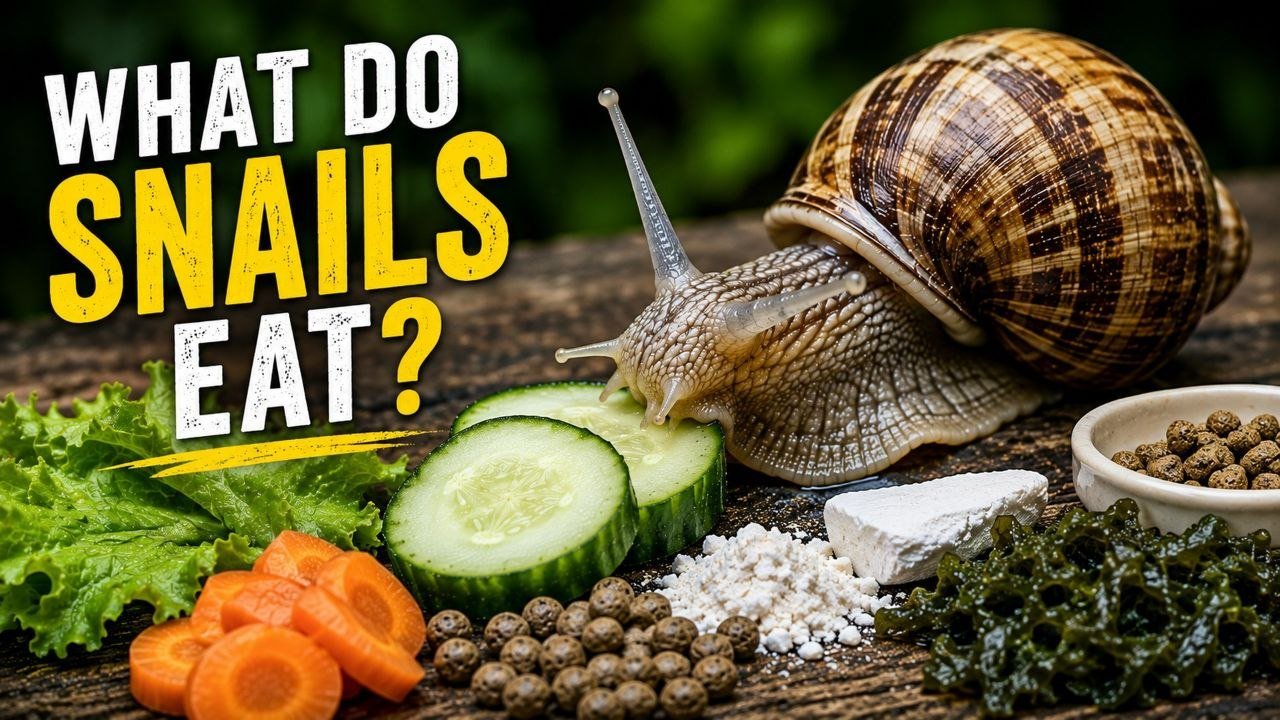
If you’ve just watched a snail glide across your tank glass or spotted one demolishing your lettuce seedlings, you’re probably asking the same question I get asked constantly: what do snails eat? The honest answer is “almost anything organic,” but that’s not much use when you’re standing in front of a fish food aisle trying to keep a mystery snail alive. So let’s get specific.
What Do Snails Eat in General?
Most snails are herbivores or opportunistic scavengers, not picky hunters. In the wild, that means algae, soft leaves, decaying plant matter, and fungi make up the bulk of a snail’s diet. A few species go further and eat meat when they get the chance, but for the snails most people keep – garden snails and the common aquarium types – plant material and biofilm cover almost everything.
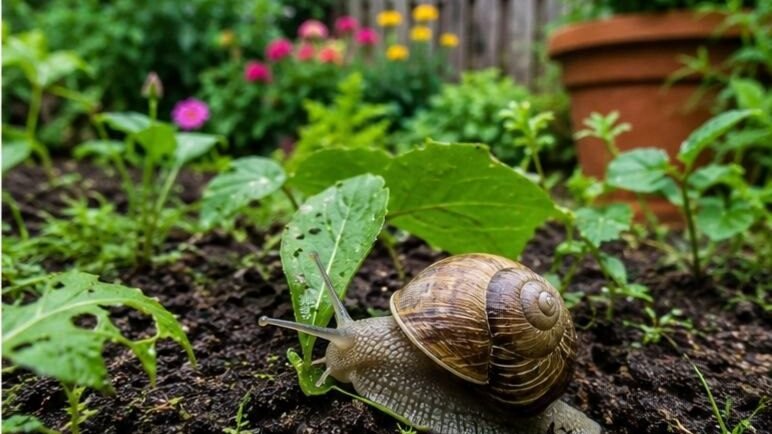
What changes the specifics is where the snail lives. A garden snail scraping bark off a tree stump is doing the same basic thing, using its radula (that rasping, tongue-like feeding organ) to shred food into tiny pieces, as a mystery snail vacuuming algae off your tank glass. The tool is identical. The menu isn’t.
What Do Aquarium Snails Eat?
This is the question I get the most, usually phrased as “what do snails eat in a fish tank” from someone who just added their first nerite or mystery snail. In a healthy, established tank, snails eat off leftover fish food, algae growing on the glass and decorations, dead or dying plant leaves, and general detritus sitting on the substrate. That’s genuinely a lot of food, and it’s the reason people love snails as tank cleanup crew
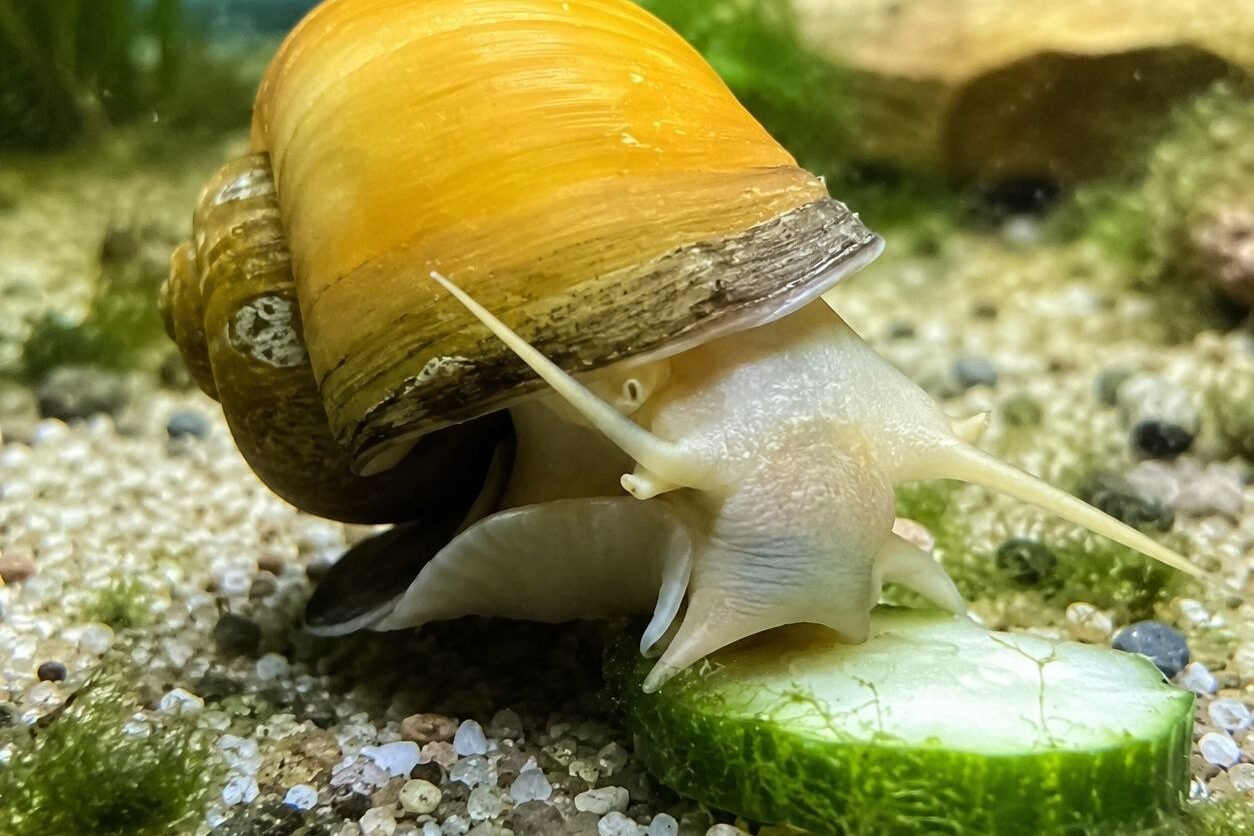
Where it goes wrong is in newer or lightly stocked tanks. There isn’t enough algae or waste yet to sustain a snail long-term, so you need to supplement. Here’s what works well:
• Algae wafers or sinking veggie discs, dropped near where the snail actually forages
• Blanched zucchini, spinach, kale, or cucumber – a couple minutes in boiling water softens it enough for a radula to handle
• Fish flakes or shrimp pellets a few times a week
• A calcium source: crushed cuttlebone, a calcium tablet, or a Repashy-style gel food mixed with calcium powder
One thing I’ve learned the hard way: uneaten food fouls water fast, and snails eat slowly. Drop in a wafer, check back in a few hours, and pull out whatever’s left. If nothing’s ever left, you can probably feed a bit more.
What Do Mystery Snails Eat?
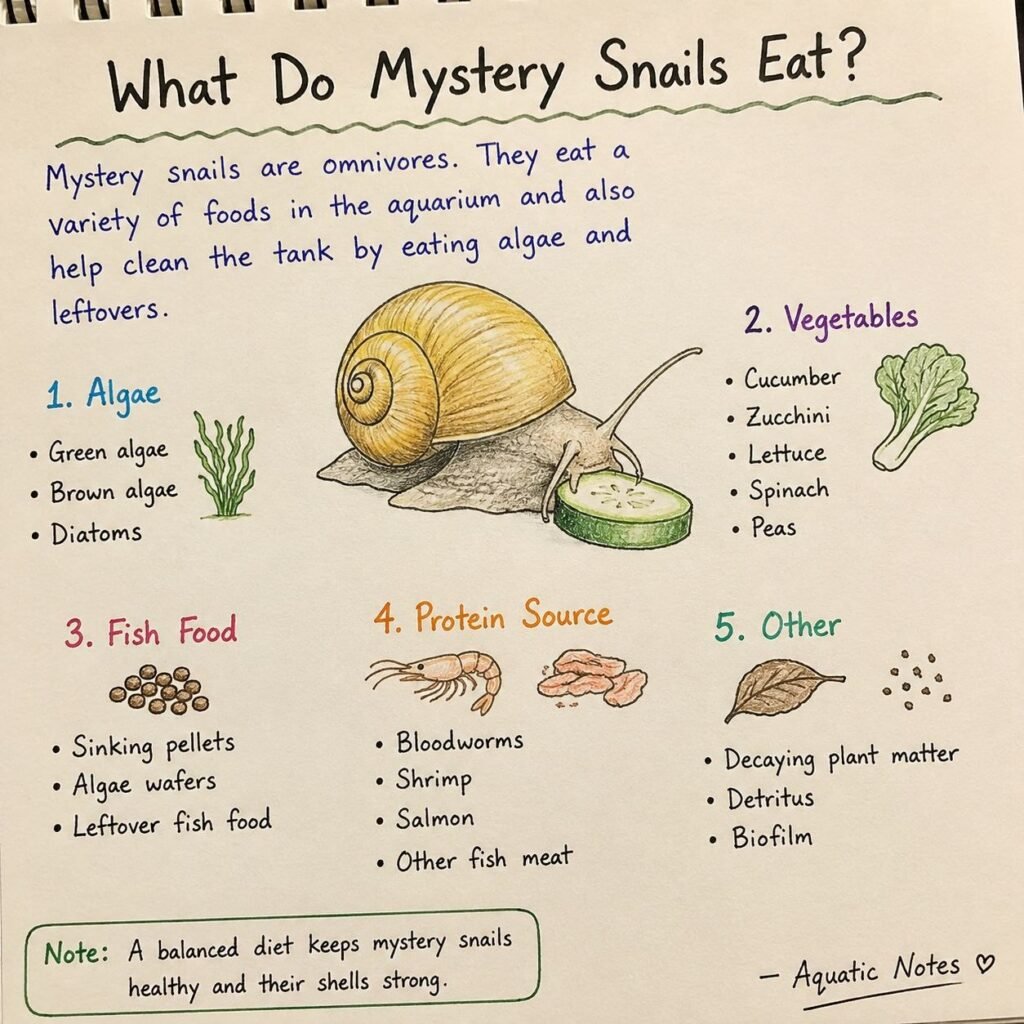
Mystery snails deserve their own section because they’re the snail most people actually go out and buy, and their diet has a few quirks worth knowing. They’re strong grazers and will eat algae, biofilm, and leftover fish food readily, but they’re not the most efficient algae eaters in the hobby (nerites usually win that contest). What mystery snails are especially good at is cleaning up dead plant leaves and excess food before it rots.
A well-fed mystery snail diet looks like this: algae wafers or shrimp pellets as the staple, blanched vegetables two or three times a week, and a dedicated calcium source, because mystery snails grow fairly large shells and burn through calcium fast. I’ve had better luck with crushed calcium tablets pressed into a bit of gel food than with just tossing in a cuttlebone and hoping – they don’t always find loose calcium sources on their own.
If you see a mystery snail nibbling on a healthy-looking plant, don’t panic and assume it’s a lost cause. More often than not it’s after a melted or damaged leaf, not the thriving growth. Keep other food available and the plant damage usually stops on its own.
Snail Diets Side by Side
Different snails, same basic building blocks, different proportions. Here’s a quick reference:
| Snail Type | Main Diet | Feed 2-3x/Week |
| Garden / land snails | Leafy greens, soft fruit, decaying plant matter, fungi | Cuttlebone or crushed eggshell |
| Mystery snails | Algae wafers, blanched veg, biofilm, fish flakes | Calcium tablet or shrimp shell |
| Nerite snails | Algae almost exclusively, some biofilm | Algae wafer as backup |
| Ramshorn / pond snails | Detritus, algae, soft plant matter, leftover fish food | Calcium-rich veg |
| Apple snails | Soft aquatic plants, algae, blanched veg, protein wafers | Cuttlebone |
Why Calcium Matters
A snail’s shell is built almost entirely from calcium carbonate, so if the diet is short on calcium, the shell tells on you fast – thin spots, pitting, cracked edges, or a flaky new-growth ring near the shell opening. This shows up more in soft or low-KH water, where there isn’t much dissolved calcium in the water itself to fall back on.
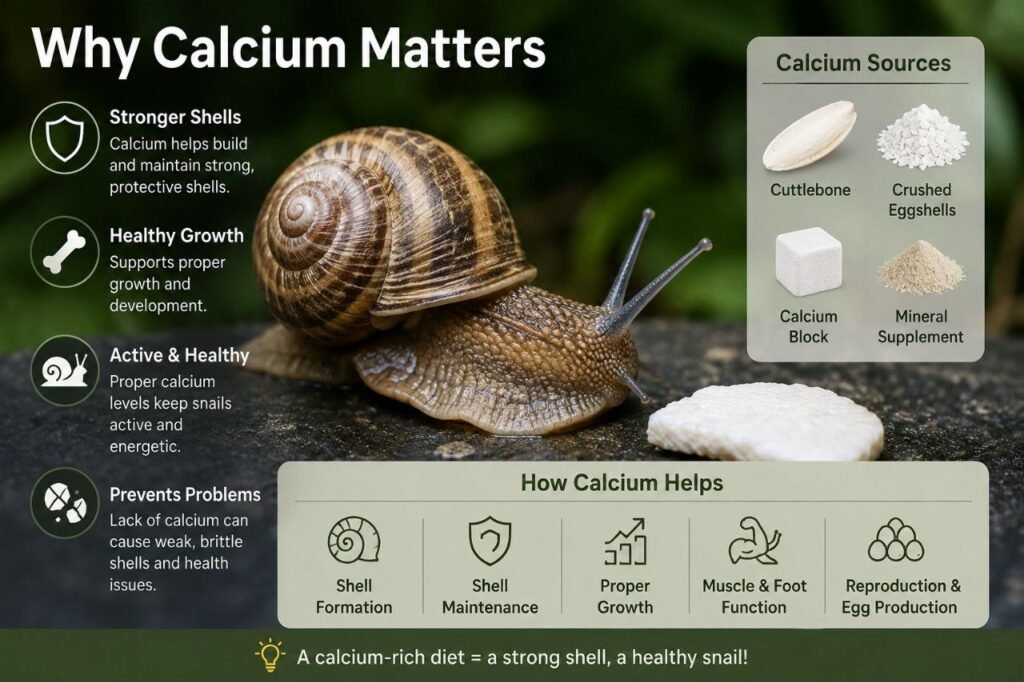
Good sources include cuttlebone, crushed eggshell, kale, and dedicated calcium supplements sold for shrimp and snails. One mistake I made early on was assuming hard tap water meant I didn’t need to think about it at all – worth checking your water’s KH before deciding calcium supplementation is optional.
Foods and Additives to Avoid
• Anything salted, seasoned, or heavily processed – salt is genuinely dangerous to snails and pulls moisture out of their bodies
• Copper-based medications or fertilizers in any tank housing snails or shrimp – copper is toxic to invertebrates even in small doses
• Iceberg lettuce as a sole food source – snails will eat it, but it offers little nutrition compared to darker greens
• Large amounts of fruit – fine as an occasional treat, not as a staple, since it’s low in the nutrients snails actually need
How Often Should You Feed a Snail?
For aquarium snails in an established tank, two to three supplemental feedings a week is typical – the rest of their diet comes from grazing on algae and biofilm you’re not actively feeding. For garden snails kept as pets, offering fresh food daily works better since they don’t have a tank ecosystem to graze on between meals, but remove anything uneaten and starting to rot within a day.
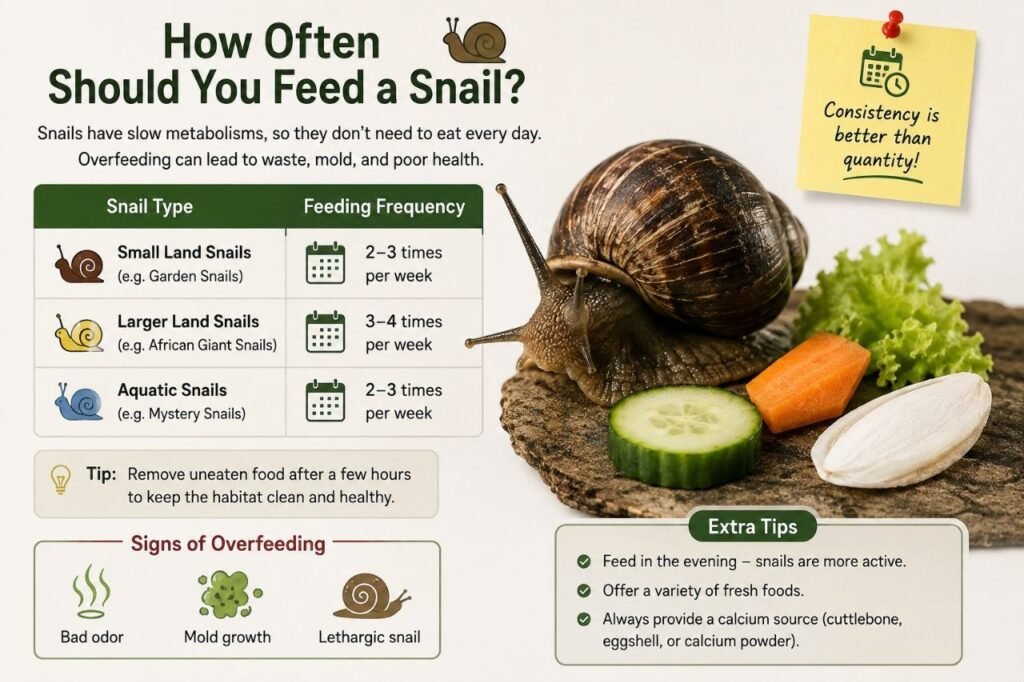
Watch the snail more than the calendar. An active snail that’s out foraging, has a firm shell, and finishes most of what you offer is doing fine. A snail that stays sealed up, has a shell edge that looks thin or cracked, or ignores food for days running is telling you something’s off, and it’s worth checking water parameters or diet before assuming the worst.
5 Signs Your Snail Is Actually Well Fed
A feeding schedule is useful, but your snail’s behavior tells you much more than the calendar.
| What you notice | What it usually means | |
| Smooth new shell growth | Calcium intake is adequate | |
| Active grazing after lights go out | Healthy appetite | |
| Firm shell edges | Good mineral balance | |
| Clear, unbroken shell color | Consistent nutrition | |
| Finishes vegetables within a few hours | Portion size is about right |
Whenever I’m unsure whether to feed more, I don’t look at the clock—I look at the shell first. Healthy new growth is usually the earliest sign that the diet is working.
Conclusion: What Do Snails Eat?
After keeping both aquarium and garden snails, I’ve found that the healthiest snails rarely have the most complicated diet—they have the most consistent one. Algae and biofilm provide their everyday grazing, fresh vegetables add essential nutrients, and calcium is what keeps the shell growing strong for years.
If there’s one habit worth building, it’s watching your snail instead of following a strict feeding schedule. A smooth shell, an active appetite, and regular evening grazing tell you far more than the calendar ever will.
Feed a little, remove leftovers, and let your snail do what it does best. Given the right food and a healthy environment, these slow little creatures are surprisingly resilient and endlessly fascinating to watch.
Frequently Asked Questions
How often should I feed my aquarium snail?
Two to three times a week is enough for most tanks, since snails also graze on algae and leftover fish food between feedings. If you’re pulling out untouched food after a few hours every time, you’re offering too much.
What do mystery snails eat besides algae wafers?
Blanched zucchini, spinach, and kale, plus fish flakes, shrimp pellets, and the occasional calcium tablet dropped in near the substrate. Mystery snails will also happily hoover up dead or dying plant leaves.
Can snails eat lettuce?
Yes, both garden and aquarium snails will eat lettuce, but iceberg has almost no nutritional value. Romaine or leaf lettuce, and darker greens like kale or spinach, are better staples.
Do snails need calcium in their diet?
Yes, and it matters more than most new keepers realize. Without enough calcium, shells turn thin, pitted, or start flaking, especially in soft or low-KH water. Cuttlebone, crushed eggshell, and calcium-rich vegetables all help.
Is it bad if my snail eats my aquarium plants?
Usually they’re after melted or decaying leaves, not healthy ones. If a snail is shredding thriving plants, it’s often a sign it isn’t getting enough other food, so add more wafers or blanched veg and see if the damage stops.
What foods should I never give a snail?
Skip anything salty, seasoned, or processed, and avoid copper-based medications or fertilizers in a tank with snails, since copper is toxic to them even in small amounts.

2 Comments