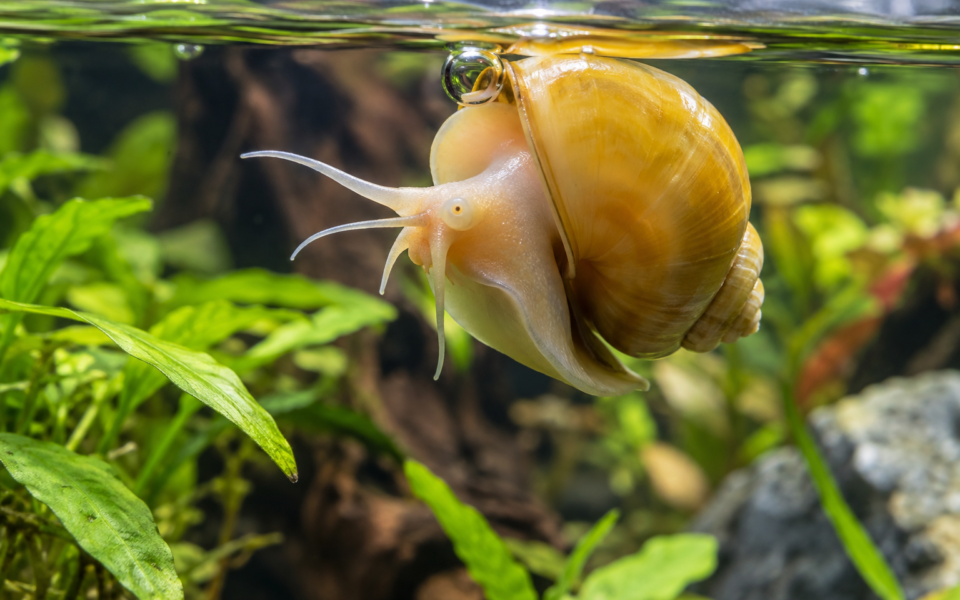
Three in the morning, tank light still on, and there’s your mystery snail sitting motionless at the top of the water like it’s been shot out of a cannon and just stopped mid-air. First thought: it’s dead. Second thought: you’re now Googling this at 3 AM instead of sleeping.
Take a breath. In almost every case, a floating mystery snail is doing something completely normal. I’ve had this exact scare more times than I can count, and it’s turned out to be an actual emergency exactly once.
The Short Answer
Mystery snails float because they breathe air, not just water. They have a lung, and regularly rise to the surface to fill it. Floating can also happen from feeding at the surface, hunting for a mate, laying eggs, or simply riding water movement to a new spot in the tank. Death is a possibility, but it’s the least common reason, and it comes with other clear signs that floating alone doesn’t give you.
Why Mystery Snails Float in the First Place
This is the part most articles skip, and it’s the part that actually explains everything else.
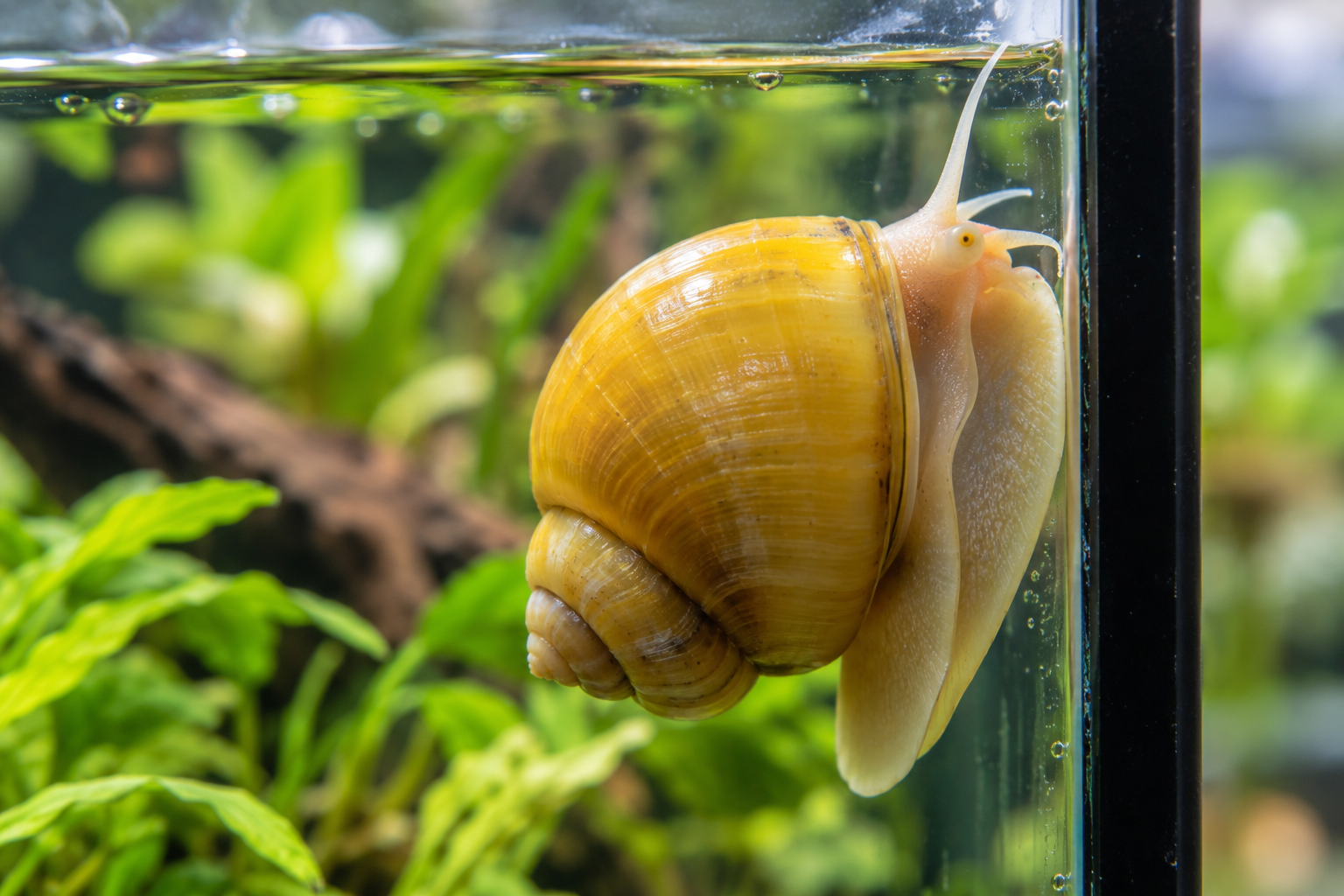
Mystery snails have both gills and a lung. Unlike most fully aquatic snails that only extract oxygen from water, mystery snails periodically rise to the surface, open a small breathing tube called a siphon, and gulp air directly into a lung-like cavity inside the shell. That trapped air does two things at once: it lets the snail breathe, and it makes the snail lighter than water.
That second part is the key to almost every floating mystery. A snail with air in its shell is buoyant, the same way a lifejacket keeps a person up. Until that air gets released or absorbed, the snail floats, sometimes drifting for a while before it decides to let the air out and sink back down.
The Real Reasons Your Mystery Snail Is Floating
1. It’s Just Breathing
This is the most common reason by far. The snail rises, takes in air, and either releases it slowly on the way back down or holds onto it for a bit while it drifts near the surface. If you watch closely, you’ll often see tiny bubbles near the shell opening right before it starts to sink.
2. It’s Hungry and Looking for Food
Mystery snails are detritivores. They’ll happily eat biofilm, the thin layer of algae and organic residue that builds up on the water’s surface. A snail that isn’t getting fed enough will trap air on purpose and float up specifically to graze on that surface film. If your snail floats up to the same spot near the waterline repeatedly, check your feeding schedule before you check anything else.
3. It’s Mating or About to Lay Eggs
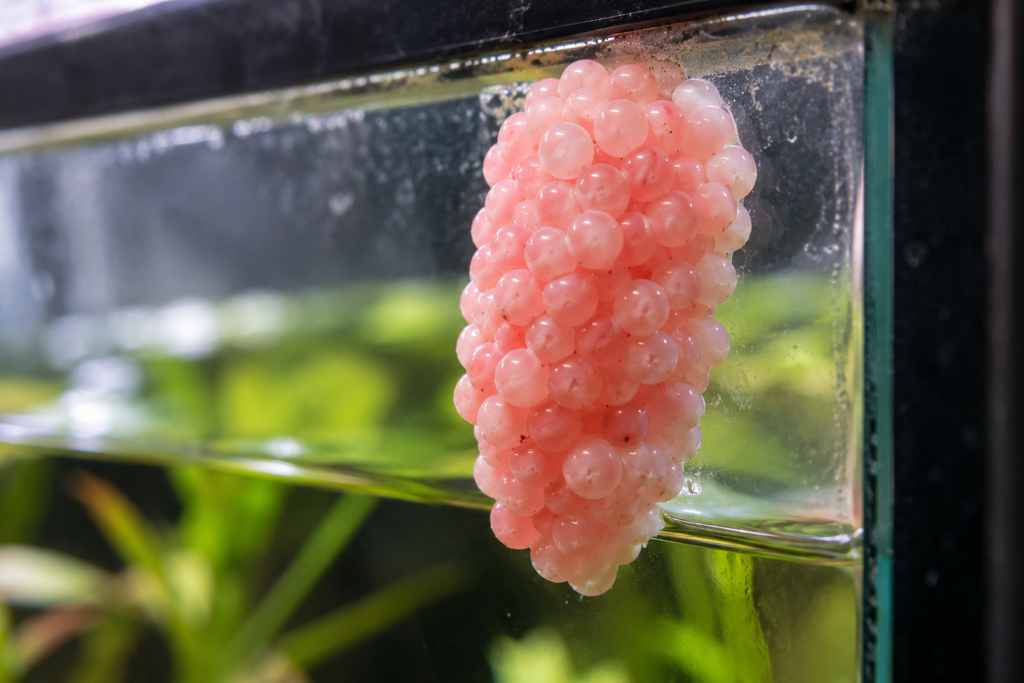
Female mystery snails lay eggs above the waterline, not underwater, which means they need to climb or float their way up to the surface and often partway out of the tank. During mating season, it’s also common to see snails clustered near the surface or drifting there for longer than usual. If you keep both males and females, this is worth ruling out before you assume anything’s wrong.
4. It Got Knocked Loose or Caught Air by Accident
Snails feeding right at the surface can accidentally gulp in more air than intended. A sudden move from the bottom of the tank to the top, maybe startled by a fish or a hand in the water, can also trap air in the shell unintentionally. This kind of floating usually resolves on its own within a few hours.
5. Poor Water Quality Is Forcing It to the Surface More Often
Here’s where floating starts to mean something worth paying attention to. If ammonia, nitrite, or nitrate levels are high, or if oxygen levels in the water are low, snails will surface more frequently to breathe air, simply because the water itself isn’t giving them enough oxygen. This kind of floating tends to be repetitive and frequent rather than a one-off, and it’s usually your first visible sign that it’s time to test your water.
I had a mystery snail start surfacing every few minutes one summer when my tank temperature spiked during a heatwave, warmer water holds less dissolved oxygen. A water change and better airflow fixed it within a day, and the snail went right back to its normal routine.
6. It’s Sick or Dying
This is the reason everyone jumps to first, and it’s real, just less common than the other five. A dying mystery snail usually shows a cluster of signs together, not just floating on its own.
How to Tell If Your Snail Is Actually Dying (Not Just Floating)
Floating by itself tells you very little. These are the signs that actually matter:
- Smell. A dead snail produces a strong, unmistakable sulfur smell within about 24 hours. If you’re not sure, this is usually the fastest way to know for certain.
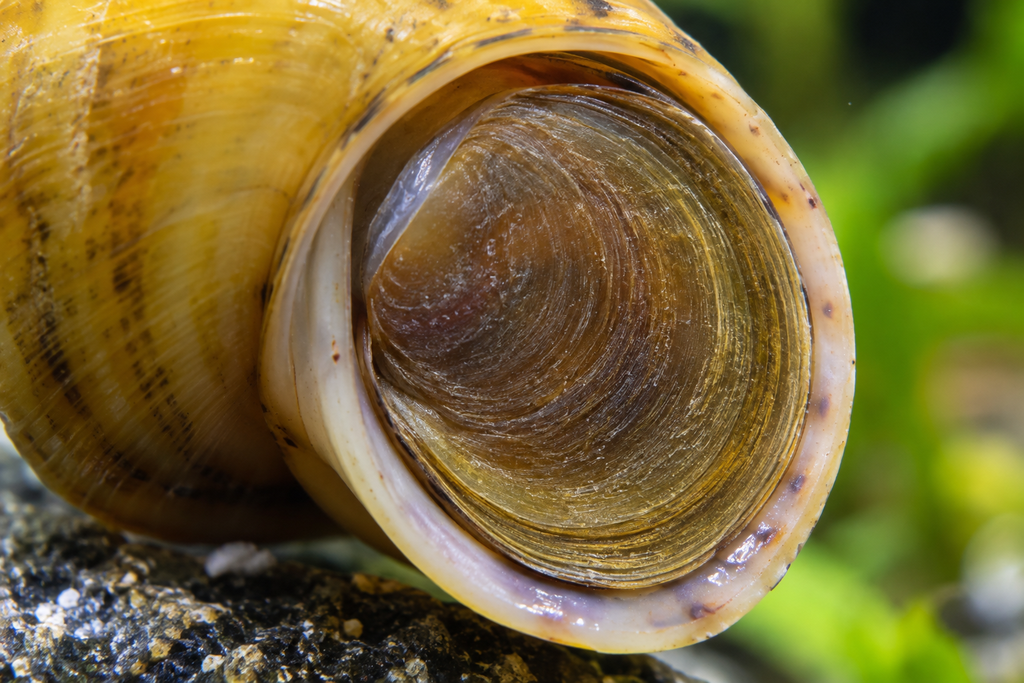
- The operculum. This is the small trapdoor the snail uses to seal itself into its shell. In a healthy snail, it stays snug against the shell opening when retracted. In a dead or dying snail, it often hangs loose, sits crooked, or has fallen out entirely.
- Weight. An empty or dead shell feels noticeably lighter than a live one. If you can safely lift the snail out of the water for a second, this is a quick check.
- No response at all. Gently touch the foot or antennae, a check worth doing the same way you’d handle a cracked shell gently. A living snail, even a sick one, usually retracts at least slightly. Total unresponsiveness over an extended period is a bad sign.
- Position. A snail that’s simply floating from trapped air is usually shell-up with the body still tucked in normally. A dying snail is more often found motionless at the bottom of the tank, not floating, sometimes lying on its side or upside down for hours without moving.
If your snail is floating but still reacts to touch, has its operculum sealed, and doesn’t smell, it’s almost certainly fine. Give it time, most trapped-air floating resolves within a few hours to a day on its own.
What I Actually Do When I See a Floating Snail
I don’t panic anymore, but I do check three things in order: operculum first, smell second, water parameters third. That sequence takes under two minutes and has been enough every time to tell me whether I’m dealing with normal snail behavior or something that needs action.
The one habit that’s actually cut down on false alarms in my tank is feeding on a consistent schedule. Since I started feeding once a day at roughly the same time, the “hungry floating” pattern has almost disappeared, and the floating I do see now is much more clearly just a quick air-and-back-down trip.
When You Should Actually Worry
Floating deserves real attention when it’s combined with any of these:
- Floating for more than 24 to 48 hours without ever fully sinking back down
- A foul smell coming from the tank
- The operculum missing, loose, or hanging open
- No response to gentle touch
- High ammonia or nitrite readings on a water test
If you’re seeing two or more of these together, that’s the point to act: test your water, do a partial water change, and check the snail closely rather than waiting it out.
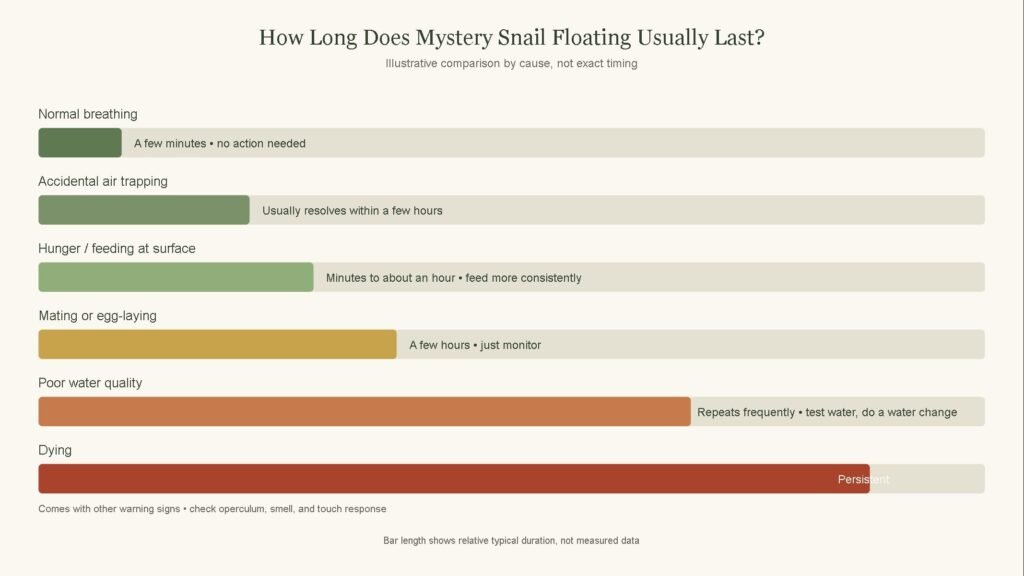
Quick Reference: Floating Causes at a Glance
| Cause | How long it usually lasts | What to do |
|---|---|---|
| Normal breathing | A few minutes | Nothing |
| Hunger / feeding at surface | Minutes to an hour | Feed more consistently |
| Mating or egg-laying | A few hours | Nothing, just monitor |
| Accidental air trapping | A few hours | Nothing, usually self-resolves |
| Poor water quality | Repeats frequently | Test water, do a water change |
| Dying | Persistent, with other signs | Check operculum, smell, and touch response |
The Bottom Line
A floating mystery snail is startling to see, but it’s rarely the emergency it looks like. Most of the time, it’s just a snail doing exactly what its biology built it to do: breathing air, chasing food, or getting ready to lay eggs. The real tell isn’t the floating itself, it’s whether the operculum is sealed, whether there’s a smell, and whether the snail still responds when you touch it. Learn those three checks once, and you’ll never lose sleep over a floating snail again.
FAQ
Is it normal for a mystery snail to float?
Yes. Mystery snails have a lung and regularly surface to breathe air, which also makes them temporarily buoyant. Occasional floating for a few minutes to a few hours is normal behavior.
How long can a mystery snail float before it’s a problem?
Floating that lasts more than 24 to 48 hours, especially combined with a bad smell or an unresponsive snail, is worth investigating. Brief floating throughout the day is not a concern.
Can a mystery snail get stuck floating and not be able to sink?
Rarely, trapped air can persist longer than usual, especially after a shock or sudden movement. Most snails release the air and sink on their own within a day without any help needed.
Do mystery snails float when they’re about to lay eggs?
Yes. Female mystery snails need to reach above the waterline to lay eggs, so floating or climbing near the surface is common in the lead-up to egg-laying.
What’s the fastest way to tell if a floating snail is dead?
Smell is usually the quickest confirmation. A dead snail produces a strong, sulfur-like odor within about a day. A loose or missing operculum is the second clearest sign.
