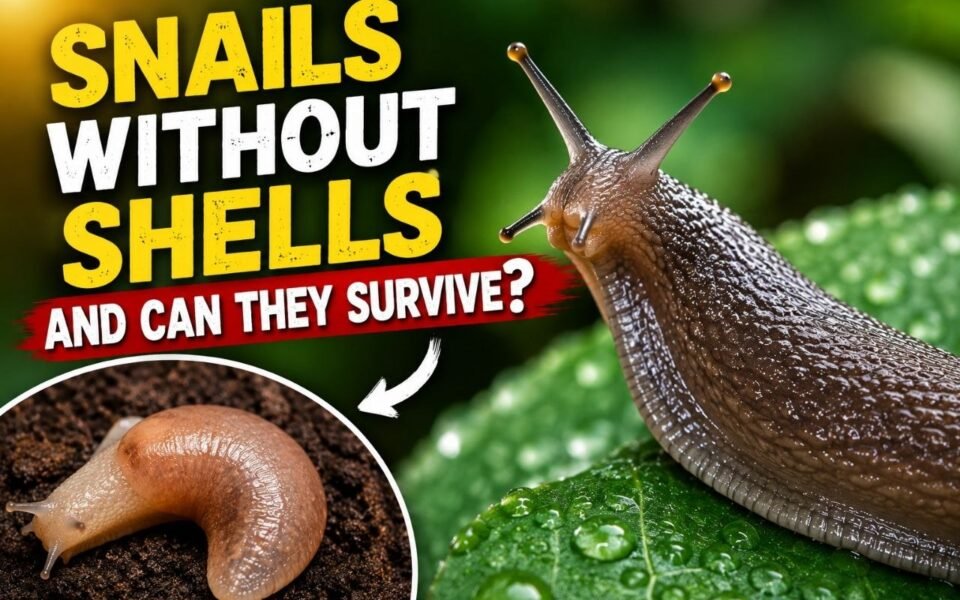
What People Mean By “Snails Without Shell”
A friend of mine called me over to his garden last week, pretty excited. He swore he’d found a snail with no shell at all. We walked over, and there it was: a slug, sitting on a leaf like it owned the place. I had to break the news: what he found wasn’t some rare shell-less snail. It was just a slug, and slugs and snails aren’t actually as different as they look.
Here’s the short version. When people search for “snails without shell,” they almost always mean a slug. True biology fact: only one group, the opisthobranchs (sea slugs), are 100% shell-free. Every land slug still has some trace of a shell. It’s either shrunk down to almost nothing or tucked away under the skin where you’d never spot it.
Can a Snail Survive Without Its Shell?
No, no. A snail cannot live without its shell.
This trips people up because the shell looks like armor, something you could, in theory, remove while the snail just goes on living underneath, soft and exposed but alive. That’s not how it works. The shell isn’t just a covering. It houses the snail’s actual organs: its heart, its lungs. Take the shell away, and you’ve exposed the organs themselves. The snail doesn’t lose its house. It loses the parts that keep it alive.
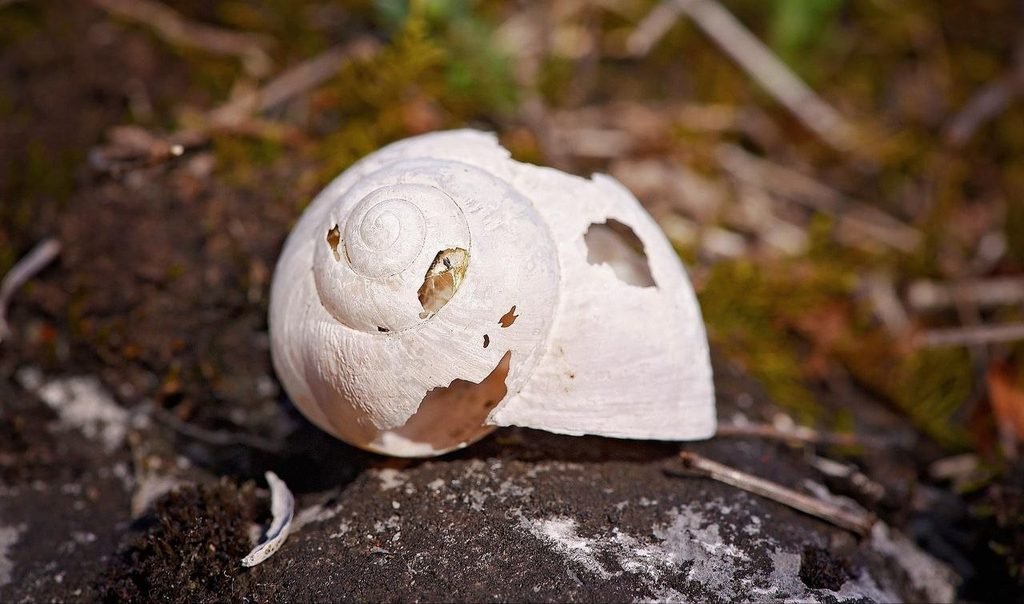
And once a shell is gone, that’s it. A snail can’t crawl into a spare shell the way a hermit crab swaps homes. The shell grows with the snail from the moment it hatches; there’s no borrowing a new one.
Beyond housing the organs, the shell does three other jobs: it keeps predators out, it slows down water loss so the snail doesn’t dry out, and it gives the body something to attach its muscles to. Take any one of those away and the snail is in trouble. Take all of them away and it doesn’t stand a chance.
Snail vs. Slug: What’s Actually Different
Snails and slugs split off from each other a long time ago, evolutionarily speaking, and the shell is exactly where the split shows.
Building a shell is expensive. Not in money, obviously, but in energy. Shells are made of calcium carbonate, and collecting and depositing that much calcium takes real metabolic effort. Somewhere along the evolutionary line, some gastropods decided that cost wasn’t worth paying anymore. Their shells shrank, generation after generation, until they either vanished or got absorbed into the body. That process has a name: vitrinisation. Slugs are the end result of it.
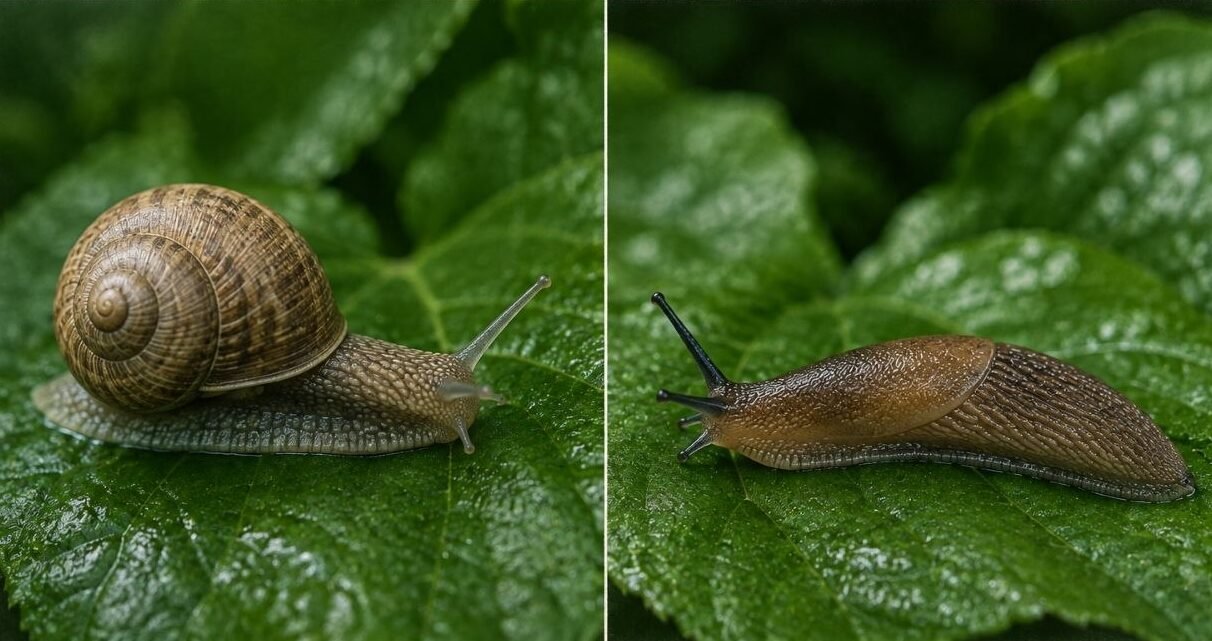
So slugs aren’t some separate invention. They’re snails’ cousins, shaped by millions of years of that shell-shrinking process. Today they’re their own thing, but the family resemblance is right there under the surface.
| Feature | Snail | Slug |
|---|---|---|
| External shell | Fully present | Absent, shrunk, or hidden under the skin |
| Energy cost to build shell | High (constant calcium demand) | None |
| Mobility | Limited (has to carry the shell everywhere) | High (can squeeze into tight gaps) |
| Main defense | Retreats into shell | Mucus, hiding, toxic secretions |
| Habitat | Land, freshwater, or marine | Mostly damp land environments |
Why did slugs give up the shell in the first place?
Two reasons, really. Building one is metabolically demanding, and carrying one around adds weight that cuts into speed and flexibility. So slugs traded protection for mobility, and made up the difference with other defenses: thick mucus, acidic secretions, and in some species, actual toxic chemical compounds that make them unpleasant to eat.
This isn’t just theory, either. In one lab experiment, scientists managed to redirect a snail embryo’s shell-forming tissue during a short window early in development, and the embryo grew up looking and behaving like a slug. It fed normally and lived for more than six months. It’s a strange but useful reminder that shell-building is a switchable program in the body, not some fixed, unchangeable trait.
Semi-Slugs: The In-Between Species
Somewhere between “full shell” and “no shell” sits a group of species that never quite finished the transition. A few worth knowing:
- Glass snails (family Vitrinidae): found in the mountains and forests of Europe, named for their thin, transparent, glass-like shells.
- Ear-shaped glass snail: its shell has gotten so small that the snail can no longer retreat into it at all.
- Yellow-shelled semi-slug: another European mountain species, same story. Shell present, shell useless as a hiding spot.
- Dromedary jumping-slug: found only on Vancouver Island, Canada. Its shell is internal, but you can actually see it through a small opening in the skin.
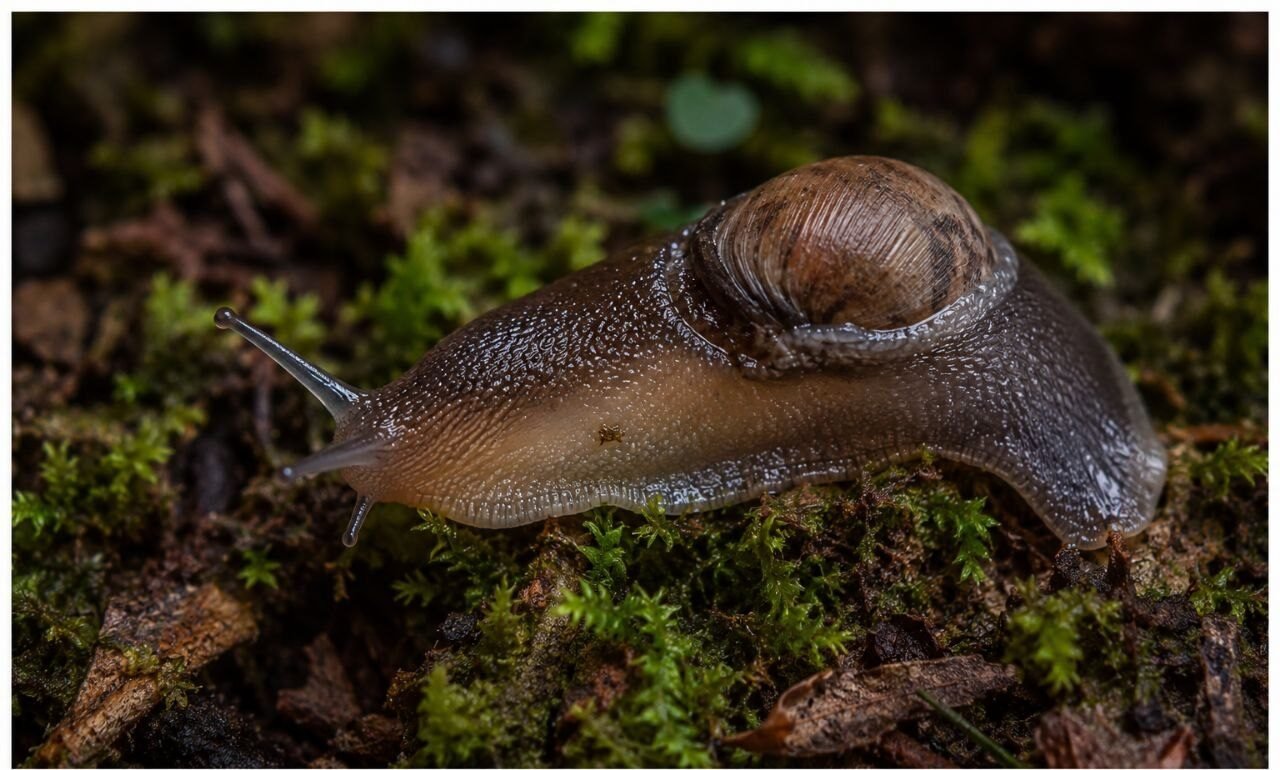
These species are basically evolution caught mid-process. It’s proof that shell loss isn’t an on/off switch, it’s a spectrum.
What If My Pet Snail’s Shell Is Cracked?
A cracked shell isn’t a death sentence the way a fully removed one is, but it’s not something to ignore either. I’ve seen this happen with a snail that got knocked off the side of its tank during cleaning; the shell chipped along one edge, and within a couple of weeks the crack had actually widened instead of healing on its own.
That’s the real risk with a cracked shell: if the snail isn’t getting enough calcium, the crack doesn’t repair itself, it spreads. To help it heal, you want a steady calcium source: cuttlebone, crushed eggshell, or a calcium supplement made for snails. Humidity matters just as much. In a dry setup, shell repair slows down noticeably, so keep the enclosure appropriately damp.
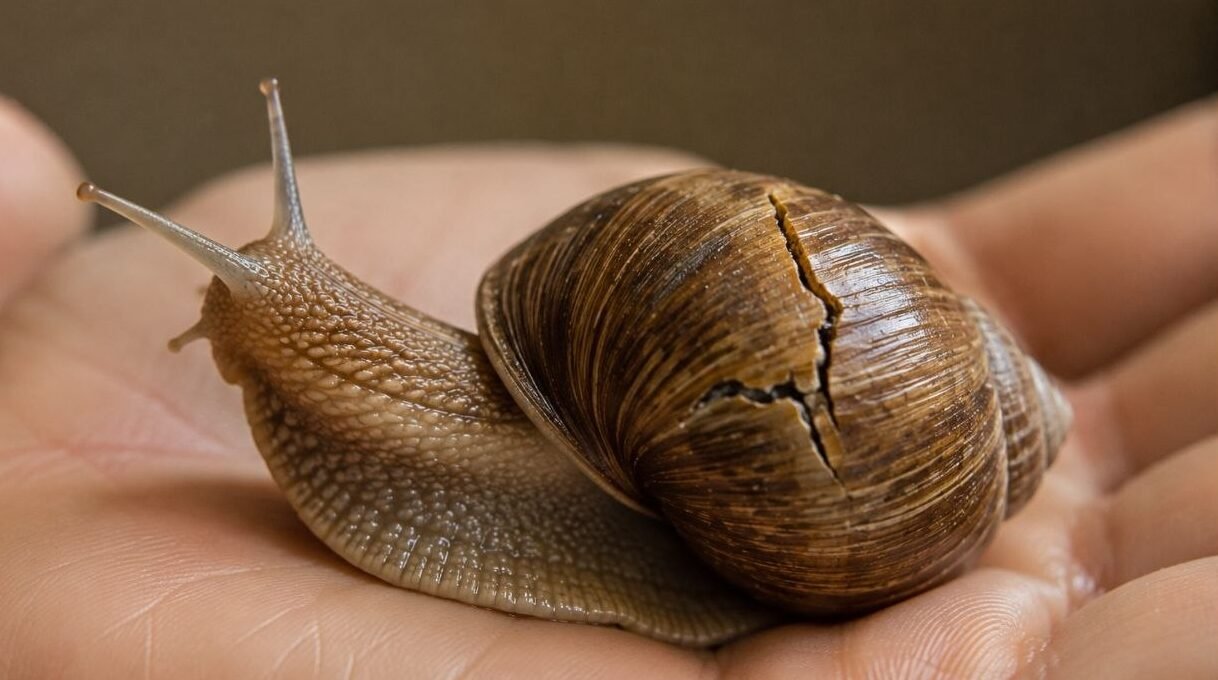
What not to do: don’t press on the cracked area to “test” it, and don’t reach for glue or superglue to seal the crack yourself. It feels like a quick fix, but it can trap moisture or bacteria against the injury and make things worse, not better.
Marine Shell-Less Snails (Sea Slugs / Nudibranchs)
Nudibranchs are the real deal, genuinely 100% shell-less as adults. They actually start out with a tiny shell during their larval stage, but it disappears completely as they mature.
They make up for the lack of armor with color, not camouflage. Many nudibranch species are bright, almost neon, which works as a warning rather than a hiding strategy. It’s a defense method called aposematism. Predators learn to associate the bright colors with toxicity or bad taste and leave them alone. It’s a completely different survival strategy from land slugs, but it comes from the same starting point: giving up the shell and finding another way to stay alive.
FAQ
Is a slug just a snail without a shell?
Not exactly, though it’s a fair guess. Slugs are the result of an evolutionary process called vitrinisation, not simply snails that had their shells taken away.
Can I remove a snail’s shell and let it live like a slug?
No. The snail’s organs are housed inside the shell, and removing it exposes and damages them. The snail will die.
What is it called when a snail has no shell?
It’s called a slug, or a semi-slug if a small, non-functional shell remnant is still present.
Do all slugs have zero shell, or just a hidden one?
Most slugs still carry a small internal or hidden shell under their skin. True 100% shell-less species are rare and mostly limited to marine slugs.
Why do some snails lose their shells over time?
Because building and carrying a shell is metabolically costly. As lifestyle and habitat needs shifted, some species evolved away from the shell in exchange for speed and flexibility

2 Comments