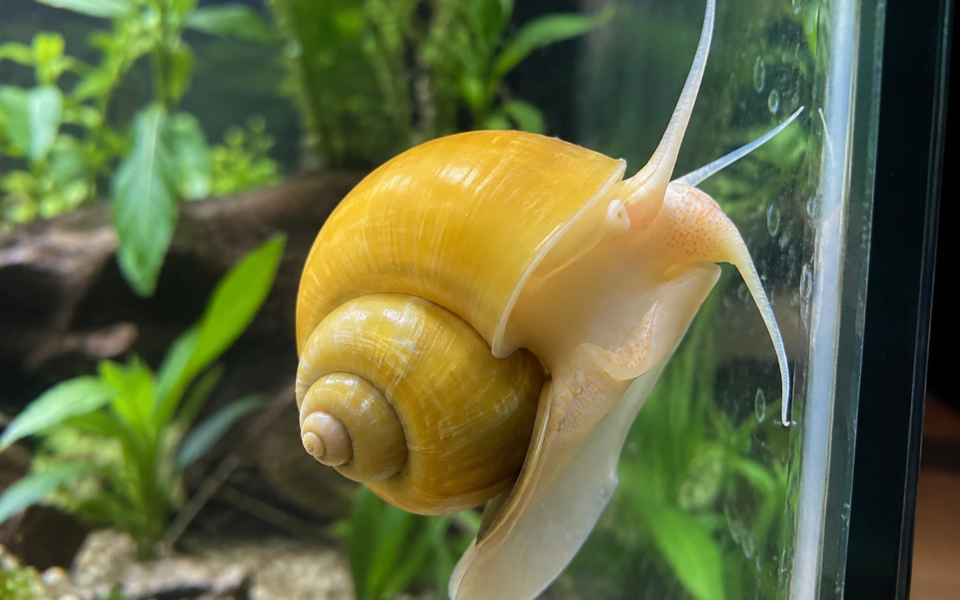
A couple of years back, a friend of ours got into the aquarium hobby and set up a freshwater tank that ended up hosting a small colony of snails he hadn’t really planned on keeping. What started as mild curiosity turned into a genuine interest in aquarium pets, and a lot of trial and error figuring out which snails were worth keeping and which ones needed managing. That’s really the split most people land in: freshwater aquarium snails are either a low-effort cleanup crew or an accidental population explosion, and which one you get depends almost entirely on the species and a few care basics. This guide draws on five years of running a freshwater tank with several snail species in it, along with what we watched play out in that friend’s setup.
What Are Freshwater Aquarium Snails, Exactly?
They’re mollusks that spend most of their time grazing algae, leftover food, and dead plant matter off tank surfaces. Some, like nerite snails, are strict algae eaters. Others, like apple snails, will eat almost anything, including live plants. A few species reproduce fast enough that “keeping snails” quietly turns into “managing a snail population” within a couple of months, which is why so many people end up searching for how to care for them and how to get rid of them in the same week.
Are Freshwater Snails Good for a Fish Tank?
In the right numbers and species, yes. Snails clean up food fish miss, graze algae off glass and decor, and keep substrate aerated as they move through it. The problem is never really the snails. It’s unchecked breeding. A tank with three or four mystery snails is a cleanup crew. A tank with two hundred pond snails because of one unnoticed egg clutch is a maintenance headache. The species you pick decides which outcome you get, so that choice matters more than almost anything else in this guide.
Best Freshwater Aquarium Snail Species
Here’s how the common options compare, side by side:
| Species | Adult Size | Diet | Breeding Speed | Best For |
|---|---|---|---|---|
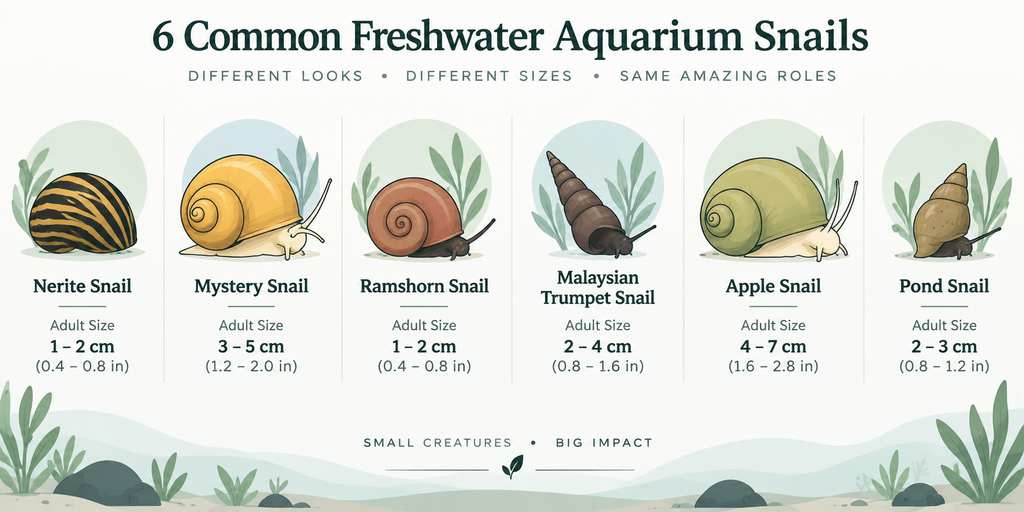
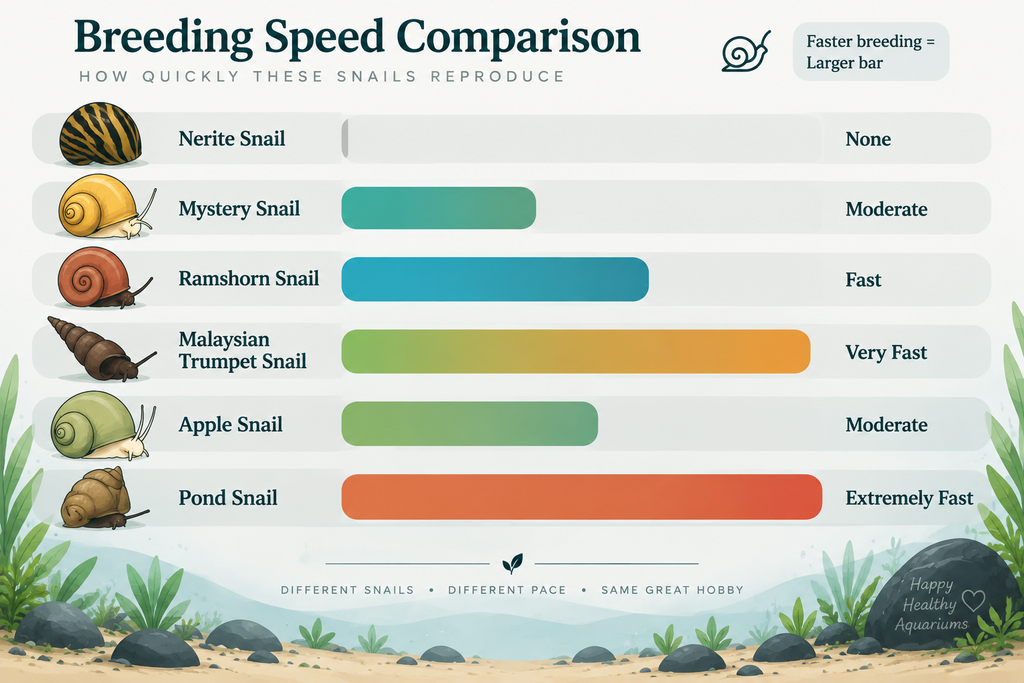
| Nerite Snail | 1 inch | Algae only | Won’t breed in freshwater | Best all-around algae eater, won’t overpopulate |
| Mystery Snail | Up to 2 inches | Algae, leftover food, some plants | Moderate, needs land access to lay eggs | Beginners, community tanks |
| Ramshorn Snail | 0.5–1 inch | Algae, detritus, soft plants | Fast, self-fertilizing | Cleanup crews in planted tanks (watch numbers) |
| Malaysian Trumpet Snail | 0.5–1.5 inches | Detritus, burrows in substrate | Very fast, live-bearing | Substrate aeration, sand-sifting |
| Apple Snail | Up to 6 inches | Algae, plants, leftover food | Moderate, lays eggs above waterline | Large tanks with tough or no live plants |
| Pond Snail | 0.5–1 inch | Algae, detritus, soft plants | Extremely fast | Not recommended (usually a hitchhiker, hard to control) |
Apple snails are worth a specific note: in parts of the southern U.S., released apple snails have become an invasive species tracked by the USGS, so never release any aquarium snail into a natural waterway regardless of species. Nerite snails are the safest pick if your main worry is an explosion in numbers. They need brackish water to reproduce, so a standard freshwater tank keeps their population flat. Mystery snails come next, in colors like gold, ivory, and blue, which is part of why they’re the most commonly kept species in community tanks.
Water Parameters and Diet
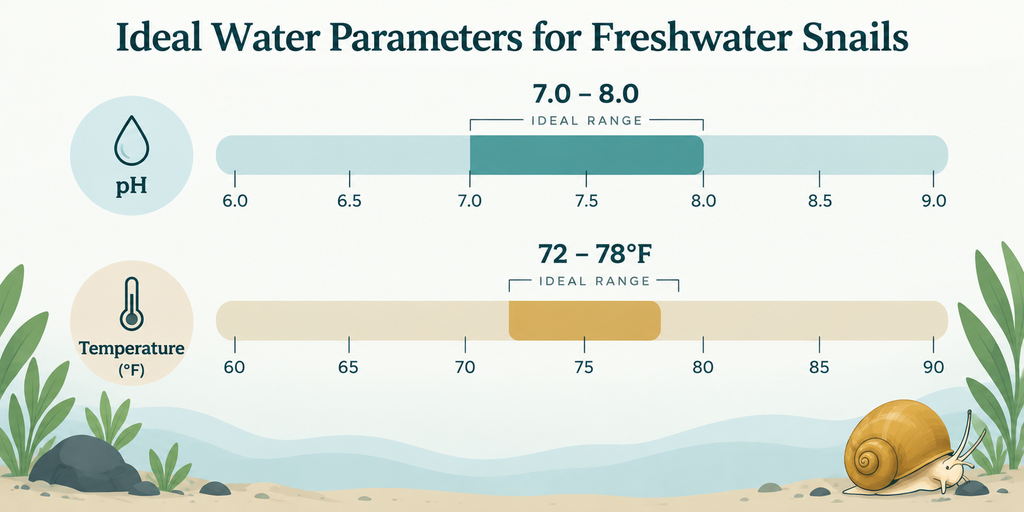
Most freshwater snails do well in a pH range of 7.0–8.0 and a temperature between 72–78°F. The pH matters more for snails than for most fish, because their shells are made of calcium carbonate. In soft, acidic water, shells slowly pit, crack, or take on that rough, eroded look you sometimes see in older tanks. If your water is naturally soft, crushed coral or a calcium supplement usually reverses this over a few weeks.
Feeding depends on the species. Algae eaters like nerites need actual algae growth to stay healthy long-term. A spotless tank will slowly starve them, so supplement with algae wafers two or three times a week if your glass stays too clean. Omnivorous species like mystery and apple snails will eat blanched vegetables such as zucchini, cucumber, or spinach alongside regular fish food. Don’t overfeed either type. Uneaten food breaks down fast and spikes ammonia, and snails are more sensitive to ammonia than most of the fish you’d keep alongside them.
As for tank mates, steer clear of assassin snails (which hunt other snails on purpose), loaches, pufferfish, and larger cichlids, since all of these will eat snails, sometimes shell and all. Peaceful community fish like tetras, corydoras, and livebearers coexist with snails just fine.
Freshwater Snail Breeding: What to Expect
This is where a lot of new keepers get caught off guard. Ramshorn and pond snails are hermaphrodites, so a single snail can lay fertile eggs with no mate at all. Malaysian trumpet snails give live birth and can produce dozens of babies a month, mostly hidden in the substrate where you won’t notice until the population’s already large. Mystery and apple snails lay visible egg clutches above the waterline, which is actually a small advantage: you can spot and remove the clutch before it hatches if you’d rather not deal with more snails.
Our friend’s tank was a case study in this. He hadn’t stocked pond snails on purpose. They came in on a plant he’d picked up secondhand, and within a couple of months there were noticeably more of them than he’d started with. The fix that worked for him was simple: cut back on feeding slightly and started pulling egg clutches off the glass whenever he spotted them. Numbers leveled off within a few weeks, without needing anything more drastic.
Why Freshwater Snails Die Suddenly
A wave of unexplained snail deaths almost always traces back to one of four things. Copper is the most common culprit. It’s highly toxic to snails even in trace amounts, according to University of Florida’s IFAS Extension research on copper use in aquarium systems, and it shows up in a surprising number of fertilizers, algaecides, and fish medications, so the label is always worth checking before dosing a tank that has snails in it. Sudden parameter swings are the second cause; snails handle stable water far better than fluctuating water, and a large, fast water change or a temperature swing of just a few degrees can kill them even when the fish in the same tank are unbothered. Shell damage from soft, low-calcium water is the third, covered above, and weakened shells eventually fail at damage that would otherwise be minor. And starvation is the fourth, showing up in tanks that are simply too clean for an algae-eating species to survive without supplemental feeding.
If you’re losing snails and can’t pin down why, test ammonia, nitrite, and pH first. Those three numbers explain most cases people can’t otherwise figure out.
How to Get Rid of Snails in a Freshwater Aquarium
If you’re dealing with the opposite problem, too many snails instead of too few, you’ve got a few real options, and none of them require draining the tank.
Manual removal is the simplest: pick snails out by hand, or trap them overnight with a piece of blanched zucchini or a weighted lettuce leaf. Snails cluster on it by morning, and you remove the whole batch in one go. Reducing feeding is the second, and often the most overlooked. Overfeeding is the number one driver of a snail boom, and cutting back to what your fish finish in two to three minutes usually lets the population level off on its own within a few weeks. Adding a predator is the third option, and the most permanent one: assassin snails hunt and eat other snail species without harming fish, and they don’t reproduce as explosively as the snails they’re eating. Quarantining new plants for one to two weeks before adding them to your main tank prevents the problem from starting in the first place, since most infestations begin with eggs hidden on plants bought from a store or traded from another hobbyist.
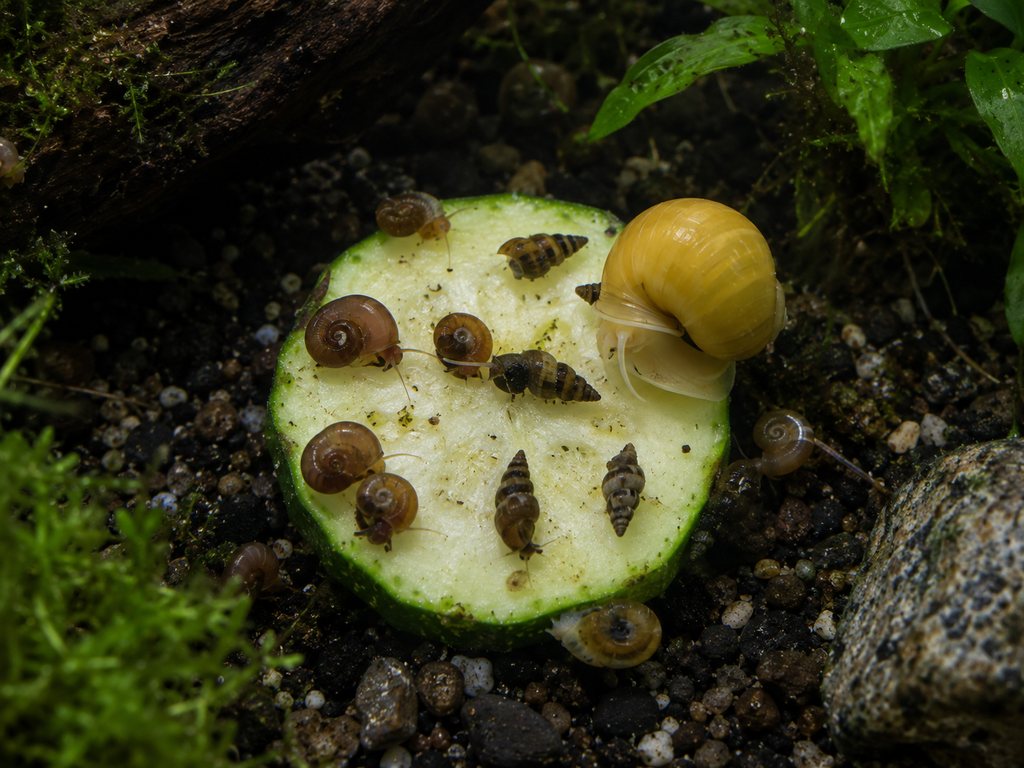
Chemical snail killers exist, but treat them as a last resort. Most contain copper, which means anything softer-shelled in the tank, along with any snails you actually wanted to keep, takes the hit too.
Common Mistakes New Snail Keepers Make
The most frequent one is buying pond snails or ramshorns on purpose without knowing how fast they reproduce, then being caught off guard by an explosion two months later. That’s more or less what happened in the tank story above, minus the “on purpose” part. Right behind that is skipping a plant quarantine and ending up with a hitchhiker population nobody asked for. A lot of keepers also assume all snails eat plants, when in reality nerites won’t touch healthy live plants while apple snails will shred them given the chance. Using algaecides or copper-based treatments in a tank that has snails in it is another common one, usually made without realizing copper is in the product at all. And when shells start looking rough or cracked, most people troubleshoot everything except calcium and pH, which is usually where the answer actually is.
FAQ
Are snails good for a freshwater aquarium?
Yes. In controlled numbers, freshwater snails clean up leftover food and algae, and they help keep substrate aerated. The species you choose determines whether they stay a helpful cleanup crew or turn into an overpopulation problem.
How do I care for snails in a freshwater aquarium?
Keep pH between 7.0–8.0, temperature at 72–78°F, and supplement calcium if your water is naturally soft. Feed algae wafers to algae eaters and blanched vegetables to omnivorous species, and avoid copper-based medications or fertilizers.
How do I get rid of snails in a freshwater aquarium without hurting my fish?
Manual removal, feeding traps made from blanched vegetables, reducing how much you feed your fish, and adding assassin snails are all fish-safe ways to bring numbers down. Avoid copper-based chemical treatments if you want to keep any snails in the tank.
Why do freshwater snails die suddenly?
The most common causes are copper exposure, sharp swings in water parameters, weak shells from soft or acidic water, and starvation in tanks with no algae or supplemental food.
Do all freshwater aquarium snails breed out of control?
No. Nerite snails need brackish water to reproduce and stay at a stable population in freshwater tanks. Ramshorn, pond, and Malaysian trumpet snails breed fast and are the species most likely to cause an overpopulation.
Bottom Line
Freshwater aquarium snails are one of the easiest additions to a tank once you pick the right species for what you actually want. Nerites for a clean, stable cleanup crew. Mystery snails if you want color and personality without the breeding chaos. Skip pond and ramshorn snails unless you’re ready to manage their numbers the way our friend eventually had to. Whatever you choose, stable water parameters and keeping copper out of the tank matter more than anything else on this list.
About the Author
Arshdeep Singh has kept a freshwater aquarium for five years, currently home to several different snail species. The care notes in this guide, covering water parameters, shell health, and breeding control, are drawn from that hands-on experience alongside standard aquarium-keeping reference.
