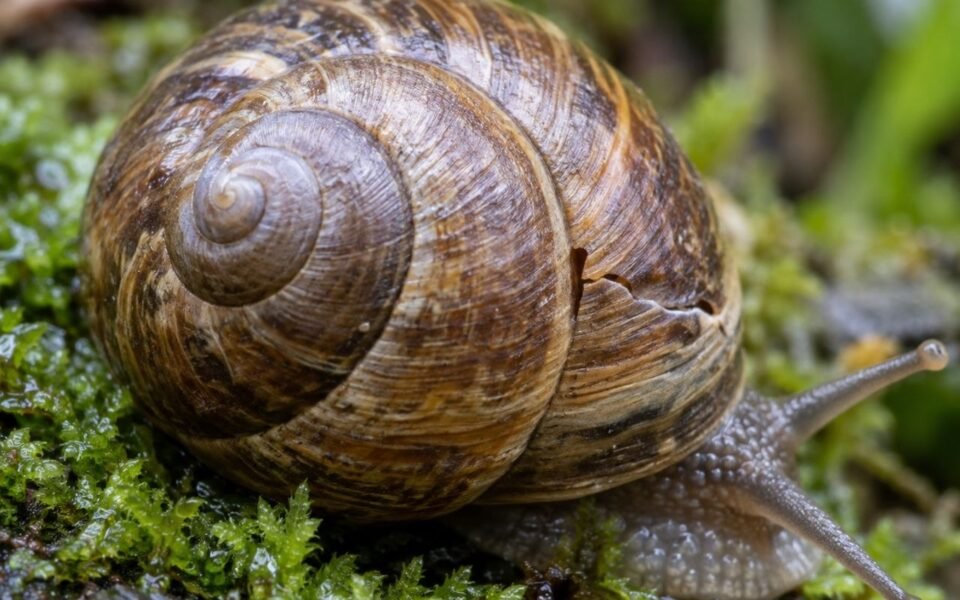
A friend of mine once watched me pull a mystery snail off the glass to check its shell, and he asked, dead serious: “Wait, does that hurt it? Do snails even feel pain?”
I didn’t have a good answer. Five years of keeping snails, and I’d never actually looked into it. I just assumed they were simple enough not to feel much of anything. Turns out that assumption is only half right, and the real answer is more interesting than a yes or no.
The Short Answer
Snails almost certainly don’t feel pain the way we do, but they’re not numb to harm either. They have nociceptors, nerve cells built specifically to detect damage and trigger a response, and research on gastropods shows behavior that goes beyond simple reflex. Whether that adds up to “pain” in the way we experience it is still an open question in neuroscience, but the evidence points toward snails experiencing something closer to pain than most people assume.
Nociception vs. Pain: The Distinction That Actually Matters
This is where most articles on this topic get sloppy, so let’s get it straight first.
Nociception is the physical detection of a harmful stimulus, heat, pressure, a chemical irritant, and the automatic response to it. A plant closing its leaves when touched isn’t nociception. But a snail pulling into its shell when poked, or retreating from something hot, involves actual sensory neurons firing and signaling “this is damaging.” That part isn’t controversial. Snails have it.
Pain is a different claim. Pain implies a subjective, felt experience, not just a reaction, but something it’s like to go through. That requires enough neural complexity to process the signal as an unpleasant experience, not just trigger a withdrawal. In mammals, this is tied to brain structures we can point to. In an animal with a simple, decentralized nervous system like a snail, that line gets blurry fast.
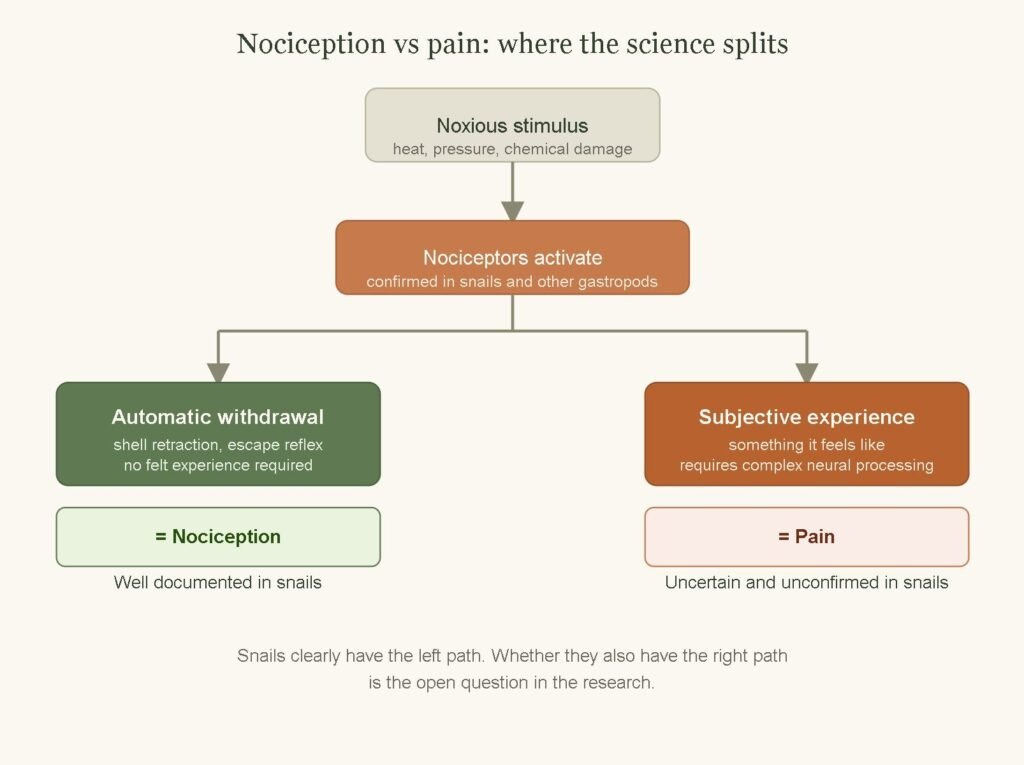
So when someone asks “do snails feel pain,” they’re really asking two different things at once, and the science only confidently answers one of them.
What the Research Actually Shows
The strongest evidence comes from gastropod nervous system studies, not snails specifically kept as pets, but close relatives with well-documented nervous systems, sea slugs like Aplysia, and land snails such as Cepaea nemoralis. A detailed 2018 review in Frontiers in Physiology lays out much of this evidence.
A few things researchers have found:
- Gastropods have well-documented nociceptors that respond to heat, pressure, and chemical damage, this is one of the better-studied nociceptive systems outside vertebrates.
- In one frequently cited study, snails didn’t just withdraw immediately after a harmful event and move on. They kept avoiding the location or situation tied to that event long afterward, a pattern that looks more like learned aversion than a pure reflex.
- Some gastropods appear to produce opioid-like compounds in response to noxious stimuli, similar to how mammals use natural pain-relief chemicals. If an animal has a built-in system for relieving something, that’s indirect evidence there’s something worth relieving.
- A widely cited 2011 review by Crook and Walters concluded that while the “felt” experience of pain can’t be directly confirmed in animals this different from us, some molluscs show motivational and behavioral patterns consistent with a functional form of pain, and recommended researchers minimize harmful procedures on them as a precaution, the same welfare standard used for vertebrate lab animals.
None of this proves snails suffer the way a dog or a human does. But it’s a lot more than “they’re basically rocks with shells,” which is the assumption most people walk around with.
Do Aquarium and Garden Snails Actually React to Harm?
Yes, and if you’ve kept snails for any length of time, you’ve probably seen it without labeling it as such.
A mystery snail with a cracked shell will often stay retracted far longer than usual, and won’t resume normal foraging until the shell has hardened back up. If a crack doesn’t close up on its own, here’s what actually helps a shell heal. A nerite snail that gets flipped or handled roughly will clamp shut and stay sealed for an extended period, longer than it takes for the “threat” to pass. That’s not just a startle reflex, it’s a sustained response, which lines up with what the aversion-learning research describes.
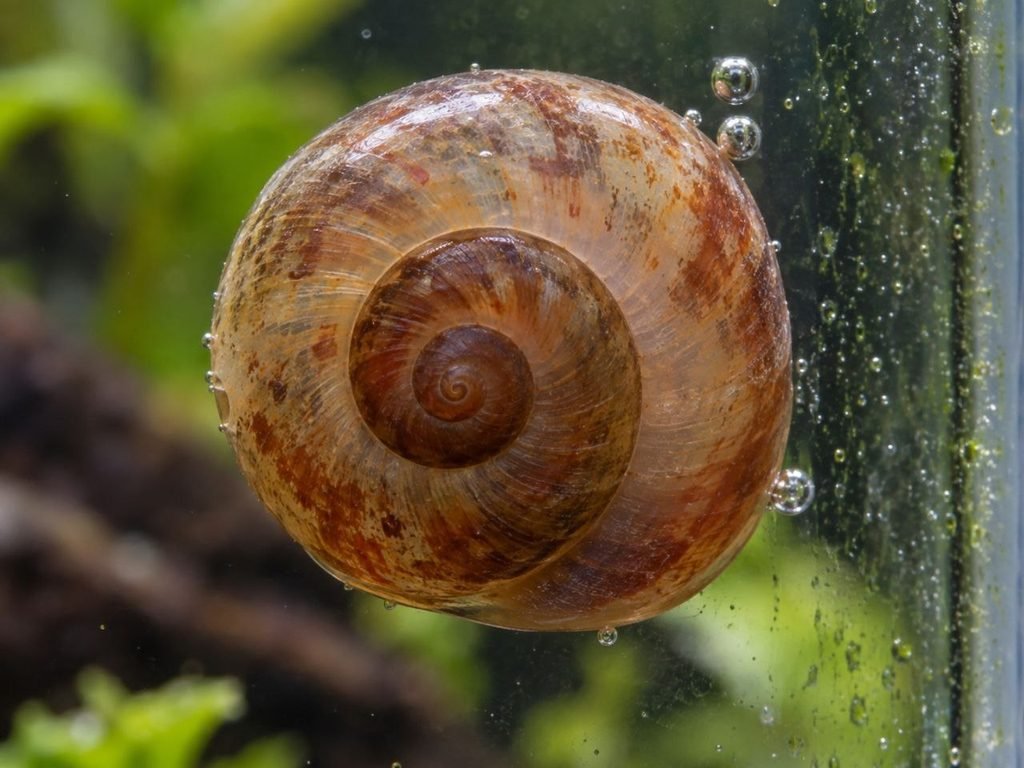
Here’s something I noticed firsthand: after I accidentally knocked a ramshorn snail off the glass with a scraper (not hard, but enough to jolt it), it stayed shell-sealed for almost two hours. A snail that’s just been rinsed off or moved during a water change usually re-emerges in minutes. That gap tells you something, the snail was responding to more than routine disturbance.
Garden snails show something similar. There’s well-documented behavior of snails actively trying to escape hot surfaces (which is part of why boiling is considered one of the more debated ways to prepare them for cooking), that’s not a random twitch, it’s a directed avoidance response to something damaging.
Where the Uncertainty Actually Lies
The honest gap in the science isn’t whether snails detect harm, they clearly do. The gap is whether that detection is accompanied by any subjective experience at all, or whether it’s closer to a very sophisticated, automatic circuit with no one “home” to feel it.
Snails don’t have a centralized brain the way vertebrates do. Their nervous system is a loose network of ganglia, clusters of nerve cells spread through the body rather than concentrated in one place. That doesn’t rule out some form of felt experience, but it makes it much harder for scientists to point to a structure and say “this is where the pain happens,” the way they can in mammals.
This is why most serious researchers avoid a flat yes-or-no answer. The responsible position, based on current evidence, is: snails almost certainly experience something when injured, and out of caution, it’s reasonable to treat that as pain-like even without full proof, rather than assuming zero experience just because it can’t be confirmed.
What This Means If You Keep Snails
You don’t need to be paranoid about this, but a few practical habits follow naturally from the research:
- Handle shells gently, especially cracked or thin ones. A cracked-shell mystery snail I once left in a tank with strong flow took over three weeks to fully seal the crack; the next one, kept still with calcium powder added to the water, closed up in under ten days. Calmer conditions clearly changed the outcome.
- Don’t drop snails into new water. Sudden temperature or chemical shifts trigger a stronger nociceptive response than a slow acclimation drip.
- Skip the “just crush it” approach to pest snail control if you can avoid it. Manual removal, assassin snails, or reducing overfeeding (the usual cause of pest snail booms) are more humane and, frankly, more effective long-term anyway.
- If a shell is damaged, treat it like an open wound, not cosmetic damage. Clean water, stable parameters, and calcium supplementation help it heal faster and likely reduce whatever discomfort is involved.
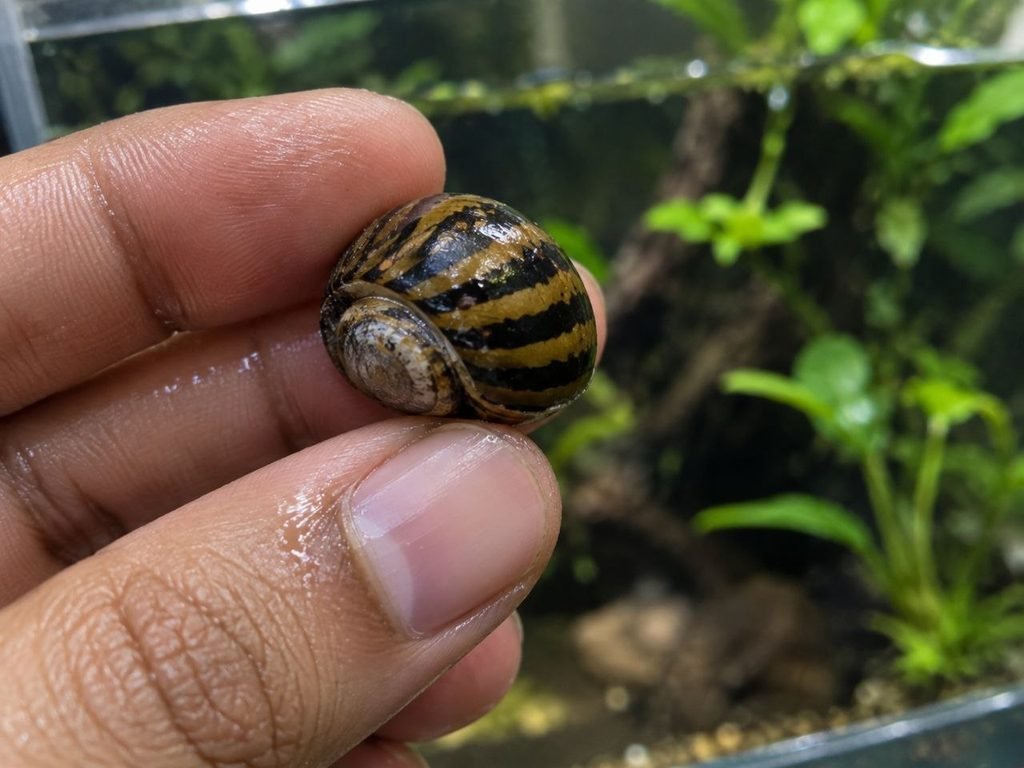
None of this requires you to believe snails suffer exactly like a mammal would. It just means treating the uncertainty responsibly instead of assuming the answer is “no” by default.
Snails Compared to Other Invertebrates on This Question
| Animal | Has nociceptors | Shows learned avoidance | Scientific consensus on pain |
|---|---|---|---|
| Snails (gastropods) | Yes, well documented | Yes, in multiple studies | Uncertain, but functional pain-like states considered plausible |
| Octopuses/squid | Yes | Yes, strongly documented | Widely accepted as likely capable of pain |
| Crabs/lobsters | Yes | Yes | Growing consensus toward likely pain capacity |
| Bivalves (clams, mussels) | Debated, minimal evidence | Little to no evidence | Considered unlikely to feel pain |
Snails sit in an interesting middle zone, more neurologically complex than a clam, less than an octopus, and the research community treats that middle ground with real caution rather than dismissing it.
The Bottom Line
Snails aren’t unfeeling shells that happen to move. They detect damage, remember where it happened, avoid it afterward, and may even have their own version of pain relief built in. Whether that adds up to “pain” in the full human sense is a question neuroscience hasn’t closed the book on, and honestly, may never fully close, given how different a snail’s nervous system is from ours.
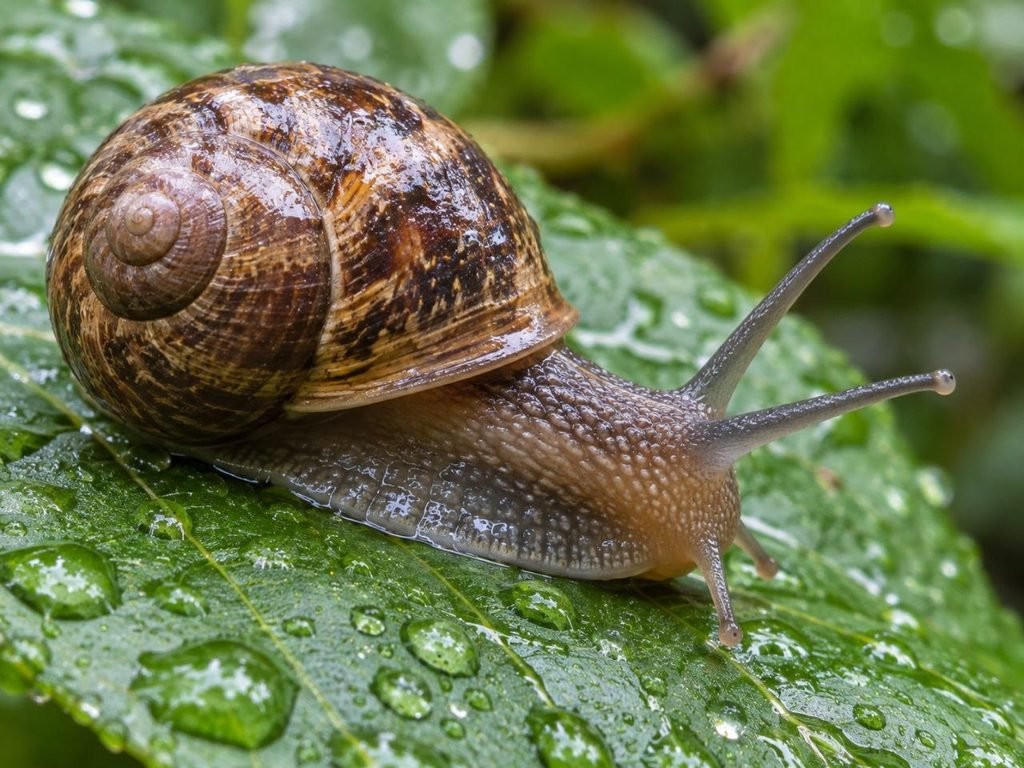
My honest answer to my friend now would be: probably not pain exactly like ours, but close enough that it’s worth handling them like it matters. That’s the standard I keep in my own tank, cracked shells included.
FAQ
Do snails have nerves that detect pain?
Yes. Snails have nociceptors, sensory neurons that detect damaging stimuli like heat, pressure, or chemical irritants, and trigger a protective response.
Can snails feel when their shell is cracked?
Research and hands-on observation both suggest snails respond to shell damage with prolonged retraction and avoidance behavior, which points to some level of harm detection beyond a simple reflex.
Is it cruel to boil snails alive?
Snails show active avoidance behavior toward heat, including attempts to escape hot surfaces, which is part of why the practice remains debated among people concerned with invertebrate welfare.
Do snails feel pain when their shell grows back?
Shell regrowth itself isn’t a nervous-system process, so it isn’t painful in that sense, but the initial injury that caused the damage likely triggers a nociceptive response.
Are snails intelligent enough to feel pain like mammals do?
No. Snails have a much simpler, decentralized nervous system than mammals, so any pain-like experience they have would almost certainly be far more basic than what a human or dog experiences.
Do slugs feel pain the same way snails do?
Slugs and snails are closely related gastropods with similar nervous systems, so the same nociceptive research applies to both.
